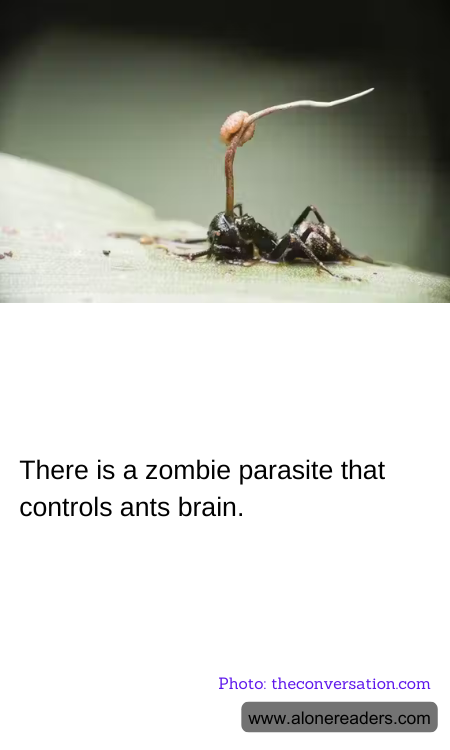
In the realm of natural oddities, few phenomena capture the imagination quite like the case of Ophiocordyceps unilateralis, a parasitic fungus that manipulates the behavior of ants for its own reproductive benefit. This fungus, often referred to as the "zombie ant fungus," has a complex and macabre lifecycle that turns an infected ant into a puppet, illustrating a striking example of nature's power and intricacy.
Ophiocordyceps unilateralis primarily infects a specific type of ant commonly found in tropical forests, such as those in Thailand and Brazil. The infection begins when an ant comes into contact with fungal spores while foraging. These spores attach to the ant's exoskeleton and then penetrate its body, eventually taking over its central nervous system. As the fungus consumes the ant's non-vital organs and grows within, it affects the ant's behavior, causing it to leave its normal habitat in the canopy and descend to a lower, more humid microclimate beneficial for the fungus’s growth.
The climax of this parasitic manipulation is both gruesome and fascinating. The fungus induces the ant to clamp onto the underside of a leaf or twig—often in the north-northwestern side, a specific orientation that favors the growth and subsequent dispersion of the fungus. This behavior is so uncharacteristic that it serves as a clear marker of infection. At this stage, the ant, still alive but under the complete control of the fungus, eventually succumbs as the fungus sprouts a long stalk out of its body, releasing new spores from its tip to infect other unsuspecting ants and continue the cycle.
From a biological perspective, this fungus is a master of neurological manipulation. Scientists have discovered that Ophiocordyceps unilateralis produces psychoactive chemicals that directly affect the ant’s brain and muscles. This precise manipulation ensures that the fungus can continue its lifecycle in the right conditions, highlighting a sinister yet fascinating example of how parasitic organisms adapt and evolve.
The study of such parasites could have far-reaching implications, from understanding the limits of parasitic control to exploring new avenues in neurology and behavior. It poses significant questions about free will in nature and the fine line between survival and exploitation. Moreover, studying how these organisms manipulate their hosts at a molecular level could pave the way for novel approaches to controlling or modifying behavior, potentially offering insights into more effective ways to combat pests or diseases. This fascinating interplay between parasite and host offers a unique glimpse into the complexity and interconnectedness of life on Earth, serving as a humbling reminder of nature's intricate balance of life and death.
