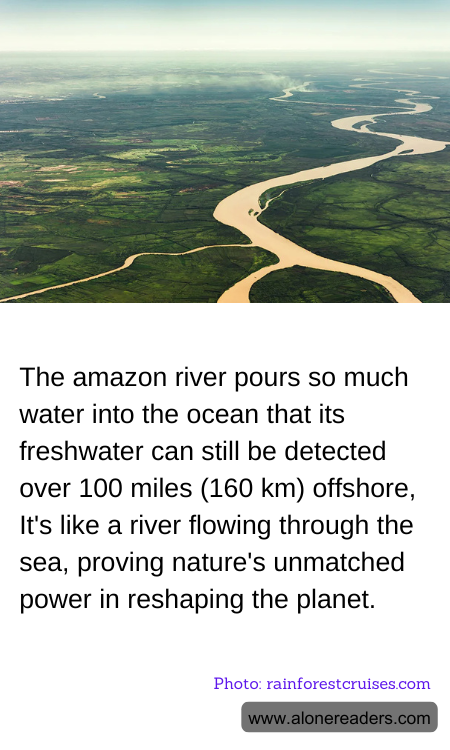
The Amazon River, a colossal force of nature, demonstrates its power where it meets the Atlantic Ocean. This river, the largest by water flow in the world, discharges an enormous volume of water estimated at about 209,000 cubic meters per second. This immense outpouring is so significant that it affects the salinity and the ecosystems of the surrounding Atlantic waters. Remarkably, the freshwater from the Amazon can be detected over 100 miles offshore. This phenomenon is not just a testament to the volume of water the Amazon expels but also to the carrying power of its currents, capable of pushing freshwater far into the ocean's saline environment.
This dilution of seawater can influence oceanic conditions in several ways. Firstly, it creates what is essentially a river within the sea, a unique convergence of freshwater and saltwater environments that supports diverse biological communities. This area serves as a critical habitat for many marine species, including commercially important fish and shrimp, which thrive in the brackish conditions. Secondly, this freshwater influx affects local and regional ocean currents. Changes in salinity can alter water density, leading to changes in ocean circulation patterns that can have both local and far-reaching climatic effects.
Moreover, the Amazon's freshwater plume acts as a conveyor belt for nutrients and sediments, which are picked up from the rainforest floor and carried thousands of kilometers. These nutrients are crucial for marine life, sparking massive blooms of phytoplankton, which serve as the base of the oceanic food chain. This biological productivity not only sustains diverse marine populations but also plays a role in carbon sequestration, highlighting the interconnectedness of Earth's ecosystems.
This grand display of natural force where the river meets the sea underlines the vital role that such freshwater sources play in shaping ocean health and, by extension, the overall health of our planet. It underscores the importance of preserving such mighty rivers, which are integral not only to their local ecosystems but also to global biological and climatic systems. The Amazon's reach, extending a significant distance into the Atlantic, serves as a stark reminder of nature's power to reshape the planet, supporting a myriad of life forms through its dynamic processes.
