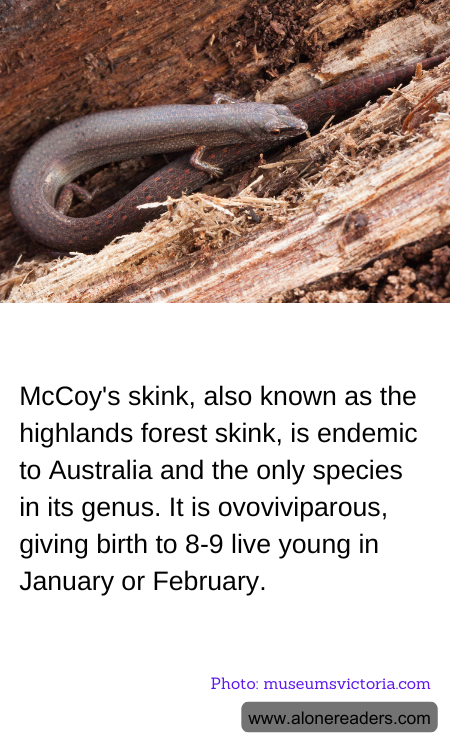
McCoy's skink, scientifically referred to as Anomalopus mccoysi, is a unique reptile endemic to Australia, thriving primarily in the highland forests of the continent. This skink distinguishes itself not only by its habitat but also by being the only species within its genus, Anomalopus, underscoring its unique evolutionary path and ecological niche.
Characterized by its sleek, streamlined body and a generally secretive nature, McCoy's skink is adapted to life under leaf litter, within crevices, and occasionally in low vegetation, all of which offer protection from predators and extreme weather conditions. The coloration and patterning of this skink provide an excellent camouflage against the forest floor, making it a challenge for both predators and researchers to spot.
One of the most fascinating aspects of McCoy's skink is its reproductive strategy. The species is ovoviviparous, a rare trait among reptiles, wherein the females retain eggs internally until they hatch, subsequently giving birth to live young. This method offers several advantages, including providing the embryos with a stable environment and increased survival rates in cooler temperatures, an adaptation likely driven by the cooler, variable climate of their highland habitats. Typically, the birthing season occurs around January or February, with females producing between 8 to 9 young per litter.
Despite its intriguing nature, McCoy's skink faces several threats, chiefly habitat destruction due to logging and land clearing for agriculture. The specificity of its habitat makes it particularly susceptible to these changes. Additionally, climate change poses a long-term threat, potentially altering the temperature and humidity levels critical for their survival and reproductive success.
Conservation efforts for McCoy's skink are essential to maintain the biodiversity of Australia’s highland ecosystems. This includes protecting large areas of forest, managing and restoring degraded lands, and implementing measures to mitigate the impact of climate change. Studies and continued monitoring of their population status and natural history are crucial to develop effective conservation strategies, ensuring that this unique species does not vanish from our planet.
