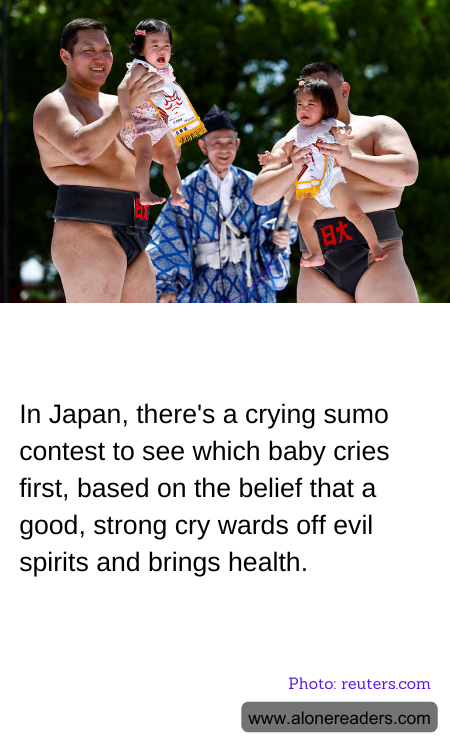
In Japan, the traditional event known as "Naki Sumo" or crying sumo, showcases a unique and ancient custom where babies are brought into the ring with sumo wrestlers to see who cries first. This intriguing competition isn't about strength or combat but is rooted in the belief that a baby's hearty cry will ward off evil spirits and promote good health. During the event, which is held at various shrines across Japan, including the famous Sensoji Temple in Tokyo, parents hand their infants to sumo wrestlers who hold them aloft in the ring. A referee is present to oversee the competition, wearing traditional attire and sometimes even donning clown makeup to add to the spectacle by trying to make the babies cry.
The ceremony begins with the sumo wrestlers gently rocking the babies and chanting phrases to encourage them to cry. If the babies do not cry within a short period, the referee intensifies the atmosphere by making faces and loud noises. The winner is the baby who cries the loudest and longest, and it is believed that the cry helps to drive away any malicious spirits that might plague the child's health. The sounds of wailing filling the air might seem unusual to outsiders, but in this cultural context, the louder and longer the cry, the more potent the supposed health benefits.
This practice, believed to date back several centuries, is deeply embedded in Shinto traditions—Japan's indigenous faith that emphasizes rituals as a means of connecting the present with the past. Participating in such events is considered an honor for the families, and they prepare their children for the contest with much enthusiasm. While it might appear odd or stressful from a Western perspective, the environment is generally supportive and cheerful, with the audience encouraging the babies and celebrating each bout of tears as a harbinger of good health.
Besides being a vibrant and picturesque spectacle, Naki Sumo is also a communal celebration of life and cultural heritage, reinforcing bonds within the community and between generations. It celebrates the hope for healthy, strong children and serves as a reminder of the community's role in nurturing the next generation. Despite modern advancements in medicine and changes in societal structures, such traditional practices continue to thrive, offering a window into the rich tapestry of Japanese cultural rituals and their underlying values.
