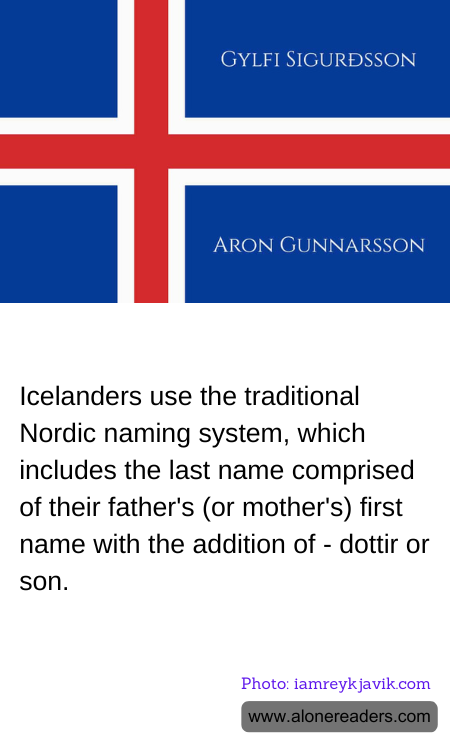
In Iceland, a distinctive and traditional naming system is still widely used, one that reflects the culture's deep roots in Norse heritage. This system, different from most Western family name practices, primarily uses patronymic or occasionally matronymic names instead of family surnames. An individual’s last name is derived from their parent's first name, with the addition of -son (son) or -dóttir (daughter). This means that the children of a man named Jón will bear the last names Jónsson or Jónsdóttir.
The use of patronymics (and less commonly matronymics, where the mother's name is used) means Icelandic names literally translate to “son of Jón” or “daughter of Jón.” This practice can be seen as both a way to honor one’s parents and a reflection of a community-oriented view of identity, emphasizing family connections over individual lineage. Hence, the phone books in Iceland are organized by first names rather than last names, and people are usually referred to by their full name or first name only.
Icelandic law also reflects the importance of this naming tradition. The Icelandic Naming Committee, Mannanafnanefnd, oversees name submissions, ensuring that new names are compatible with Icelandic tradition and can be easily incorporated into the language. This means they must conform to Icelandic grammar and pronunciation rules, and new last names that do not follow the traditional system, like family surnames, are rarely approved. This regulation has preserved the practice, keeping it prevalent throughout the country.
This naming system also emphasizes the fluid notions of identity and lineage. Since family names do not carry over for generations as in many other cultures, each generation has a new set of last names. This means there is less focus on lineage and more on the immediate family. For tourists and outsiders, this practice can be confusing but is a cherished part of Iceland’s cultural heritage, linking present populations with their Viking ancestors.
