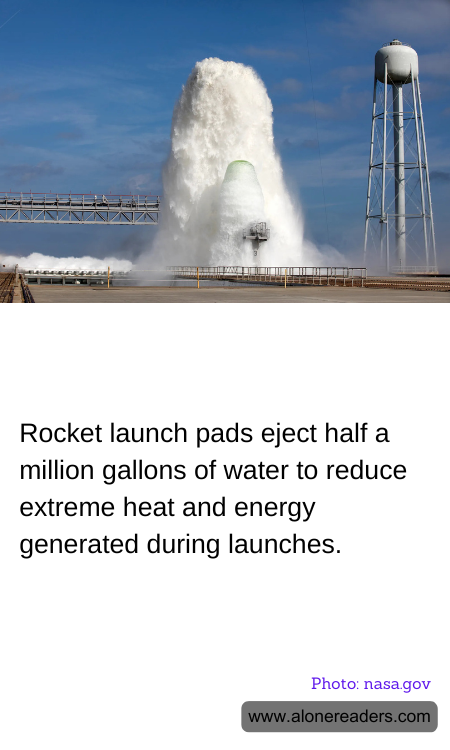
During a rocket launch, an incredible amount of heat and energy is generated, which can be damaging not only to the rocket but also to the launch pad and surrounding infrastructure. To mitigate these effects, launch pads are equipped with a water deluge system that releases vast quantities of water in just a few seconds. Specifically, around half a million gallons of water can be sprayed onto the launch pad during liftoff. This system serves two critical purposes: cooling and noise suppression.
The sheer intensity of the heat produced by the rocket engines - which can reach temperatures exceeding 3,000 degrees Fahrenheit - could otherwise melt components of the launch structure. The water deluge system cools the flames effectively, protecting both the structural integrity of the launch pad and the engines themselves. By absorbing and evaporating the heat, the water helps to keep temperatures at a more manageable level. This process not only safeguards the hardware but also ensures the safety of the operation.
Furthermore, the system plays a crucial role in noise reduction. Rocket launches generate sound levels that can reach up to 200 decibels, enough to impair human hearing permanently. The water reduces this noise pollution significantly by disrupting the sound waves and acting as a physical barrier, which helps in controlling the vibrations produced by the thrust. Additionally, this function protects nearby structures and wildlife from the potentially harmful effects of the noise.
The engineering behind such water deluge systems is complex and involves precise timing to optimize both cooling and noise suppression while ensuring that the water itself does not adversely affect the rocket's operation. The rapid dispersal of water is usually controlled by high-speed pumps and large holding tanks strategically installed around the launch site.
This use of water is an excellent example of how engineering ingenuity combines with environmental management to achieve a successful and sustainable space launch. Each launch site may tweak its system based on specific needs and environmental considerations, but the underlying principles of heat absorption and sound reduction remain consistent across global space agencies. The spectacle of water fountains at a rocket launch is not just visually striking but a testament to the meticulous planning and understanding of physics required to achieve space travel.
