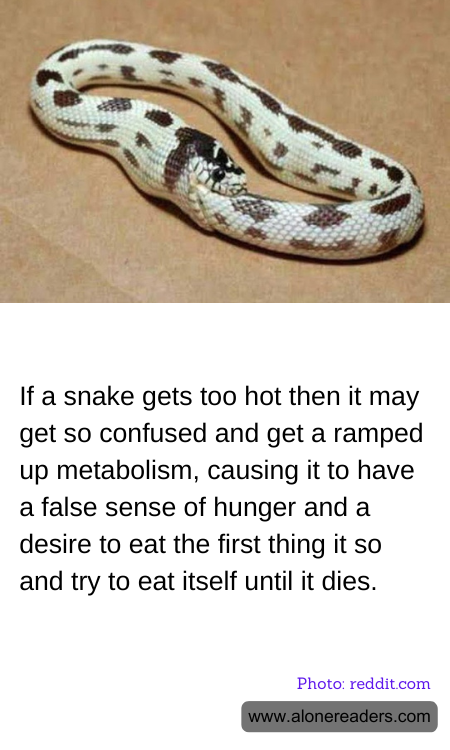
Snakes, being ectothermic animals, rely heavily on external heat sources to regulate their body temperature. This trait, while beneficial in some aspects, puts them at risk in excessively warm environments. When a snake becomes overheated, its body begins to malfunction in various ways. One of the critical outcomes of overheating is the potential onset of confusion and disorientation. This neurological disruption can lead to unusual behaviors, one of which might manifest as a snake attacking itself.
As the snake's body temperature rises, its metabolism can accelerate. Metabolism in reptiles is closely linked with temperature, and a rapid increase can cause a snake's bodily processes to speed up unnaturally. This hypermetabolic state might falsely signal the snake that it needs more energy, translating into an intense feeling of hunger. In a confused and overly hungry state, the snake may fail to recognize parts of its own body. Mistaking it for prey, the snake might begin to consume itself, a behavior known as autophagy.
This self-cannibalism is highly unusual in the animal kingdom and particularly distressing to observe. It is, however, preventable with proper care. Snake owners must ensure that their pets' environments are well-regulated, avoiding extreme temperatures. Provision of a gradient in temperature within the enclosure allows the snake the choice to move to cooler areas as needed. Monitoring and controlling environmental temperatures are crucial for the health and well-being of pet snakes.
Moreover, these conditions underscore the importance of understanding and respecting the delicate balance required in caring for reptiles. Overheating can also lead to dehydration, another serious condition that can further exacerbate physiological stress in snakes. Ensuring that snakes have access to shaded areas and adequate fresh water is essential.
Overall, while the scenario of a snake eating itself due to overheating is a stark and dramatic illustration of the consequences of thermal mismanagement, it emphasizes the broader principle that all pet owners and wildlife handlers should maintain vigilance and commitment to providing a safe, healthy environment for these sensitive creatures.
