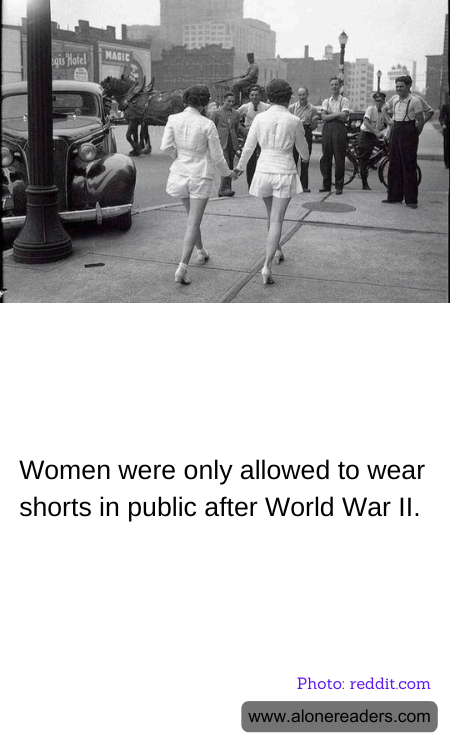
The widespread acceptance of women wearing shorts in public is a relatively modern phenomenon, especially when viewed against the long backdrop of clothing history. Throughout different periods, women’s attire has often been subject to strict societal norms and regulations that reflected broader cultural attitudes towards modesty and gender roles. Before World War II, women typically wore dresses or skirts, and shorts were primarily considered sportswear or a garment for children.
However, World War II marked a significant turning point in many aspects of social and cultural life, including women's fashion. During the war, many women took on roles traditionally held by men who were away fighting, including work in factories and other labor-intensive jobs. The nature of this work required practical and comfortable clothing, which made trousers and shorts more common for women in these environments. This was a practical shift initially, fostered by necessity, but it began to influence fashion more broadly.
The post-war period saw significant changes in societal attitudes, and gender norms began to shift as women pushed for greater independence and equality. The wearing of shorts by women in public became a symbol of these broader changes. By the 1950s and 1960s, it had become increasingly common to see women wearing shorts in casual settings. This shift was also propelled by the popularity of Hollywood films and celebrities, who often set trends in fashion. Actresses and public figures sported shorts, thereby normalizing them as appropriate public attire for women.
The evolution of shorts in women's fashion illustrates how clothing can be deeply intertwined with social and cultural transformations. As societal values shifted towards a greater acceptance of casual wear and as gender norms evolved, shorts became a staple in women's wardrobes, reflecting broader themes of freedom and change. Today, shorts are an uncontroversial choice for women in most parts of the world, indicative of the significant strides towards gender equality and the relaxation of dress codes that have characterized the modern era.
