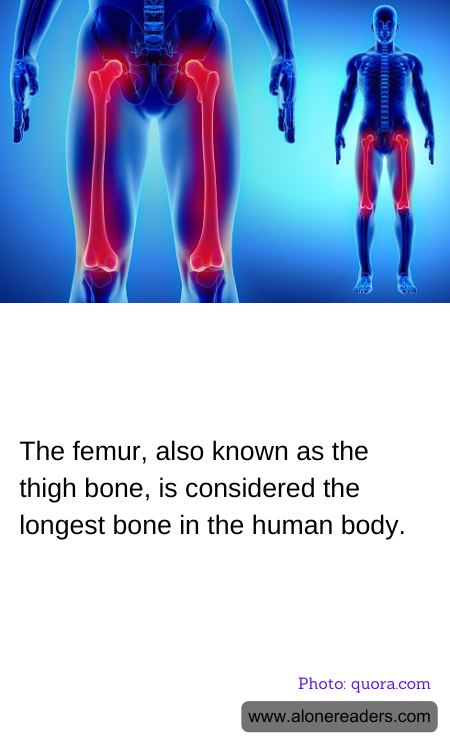
The femur, or thigh bone, is not only the longest but also the strongest bone in the human body. Its robust structure is tailored to support the weight of the body and withstand the forces and stress of movement and load-bearing. Located in the upper leg, the femur connects to the pelvis at the hip joint at its proximal end and links to the knee joint at its distal end. The upper part of the femur consists of the head, the neck, and the greater and lesser trochanters which are critical for muscle attachment and leverage.
The head of the femur is a rounded structure that fits into a socket in the pelvic bone, known as the acetabulum, forming the hip joint. This ball-and-socket configuration allows for a wide range of movement, including walking, running, and jumping, with the articular cartilage covering the surfaces to facilitate smooth motion and reduce friction. The neck of the femur, a narrower area below the head, serves the crucial role of connecting the head of the femur with the shaft. This part is often involved in fractures, especially in the elderly, due to its relatively thinner structure compared to the rest of the bone.
The shaft of the femur tapers as it moves down towards the knee, where it ends in two rounded protrusions known as the medial and lateral condyles. These articulate with the tibia and patella at the knee joint. The anatomy of the femur is precisely aligned to distribute the body's weight and handle the different forces as they are transmitted along the leg. Moreover, the femur plays a pivotal role in blood cell production; its marrow is a major site of hematopoiesis, the process by which new blood cells are generated.
Given the significant mechanical and physiological roles the femur holds, injuries to this bone, such as fractures, can have profound effects, reducing mobility and requiring a lengthy period of recovery. Treatments vary depending on the location and severity of the fracture but often involve surgical intervention to restore the proper alignment and function of the bone. In the elderly, who are more susceptible to osteoporosis, the femur can become increasingly fragile and prone to breaks from falls, highlighting the importance of maintaining bone health throughout life.
Maintaining a healthy lifestyle that includes a balanced diet rich in calcium and vitamin D, along with regular exercise, can help keep the femur and other bones strong. Weight-bearing exercises, in particular, promote bone density and can help prevent conditions like osteoporosis in the long term, thus helping to sustain mobility and independence as one ages.
