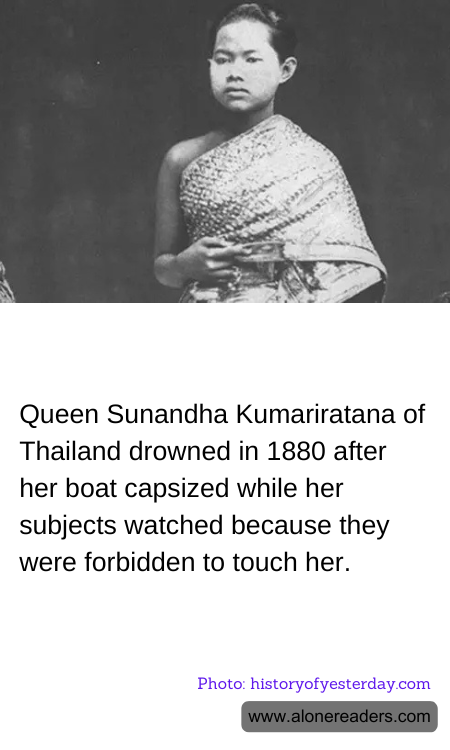
In 1880, a tragic event unfolded that ended the life of Queen Sunandha Kumariratana of Thailand under extraordinarily tragic circumstances. Queen Sunandha was traveling to the Bang Pa-In Royal Palace when her boat suddenly capsized. Despite the immediate danger to her life, the queen's subjects stood by helplessly as they watched her drown.
This dreadful incident was complicated by a strict royal law that forbade any commoner from touching the queen, under penalty of death. The law, deeply rooted in the divinity traditionally associated with Thai royalty, posited that commoners were too impure to touch a person of royal blood. Thus, even as the boat carrying the queen overturned and she was clearly in peril, her attendants and other onlookers could do nothing to help her.
The death of Queen Sunandha not only highlighted the harshness and impracticality of such laws but also deeply affected King Chulalongkorn, her husband. The king was left devastated by the loss of his wife and their unborn child. This tragic event reportedly influenced the reform of certain royal protocols, although substantiating changes directly linked to this event is complex, given the slow pace of cultural and regulatory shifts related to the monarchy at that time.
This heartbreaking event underscores not only the human cost of stringent social stratifications and laws but also the broader implications of rigid adherence to tradition at the expense of human life. Queen Sunandha's death remains a poignant reminder of the need for laws and cultural practices to evolve to better protect and value human life in all circumstances.
