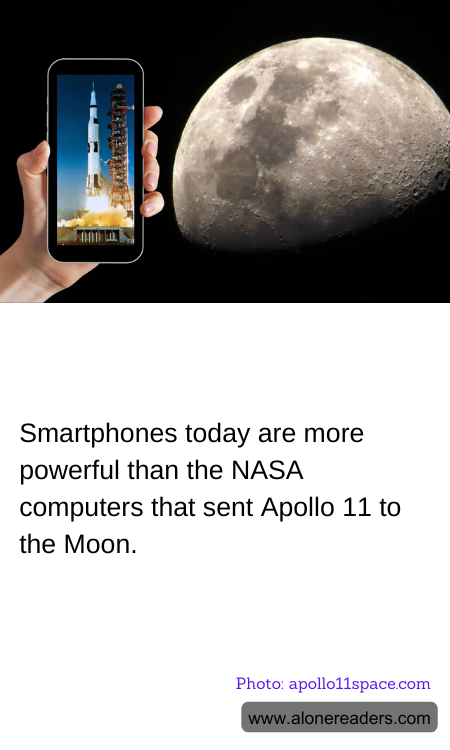
In today's fast-moving technological world, the capabilities of smartphones are remarkably advanced, to the extent that a typical modern smartphone possesses more computing power than the computers used by NASA during the Apollo 11 Moon landing mission in 1969. The historic Apollo Guidance Computer (AGC), which was integral to the success of the mission, operated with a meager 64 KB of memory and processed instructions at 0.043 MHz. This starkly contrasts with today’s smartphones, which boast up to several gigabytes of RAM and multi-core processors that run over a thousand times faster.
This exponential growth in computing power within just a few decades highlights not only the rapid advancements in semiconductor technology, adhering to Moore's Law, but also shifts in technology usage and integration into daily life. While the AGC was designed singularly for navigating the spacecraft and lunar module, contemporary smartphones multitask on a grand scale, accommodating games, high-definition video streaming, complex apps, and sophisticated camera systems.
Moreover, the footprint of technology in everyday life has shifted immensely. The AGC was at the cutting edge of technology in its time, primarily accessible to specially trained astronauts and engineers. In contrast, smartphones are ubiquitous and essential devices for daily functions in many people's lives across the globe, demonstrating a democratization of access to powerful computing tools.
This reality fosters reflection on how far technology has come and speculations about the future. Today's smartphones not only contain more computing power than the AGC but also showcase advancements in user interface, software diversity, and connectivity. These devices integrate with emerging technologies like augmented reality, machine learning, and global connectivity platforms, which are pushing the boundaries further than ever before.
In conclusion, the comparison between today’s smartphones and the AGC serves as a testament to human progress in technology. From the monumental feat of landing humans on the Moon using what by today's standards would be seen as primitive computers, to billions of individuals carrying exceedingly more powerful devices in their pockets, the journey of technological advancement continues to amaze and galvanize visions of future possibilities.
