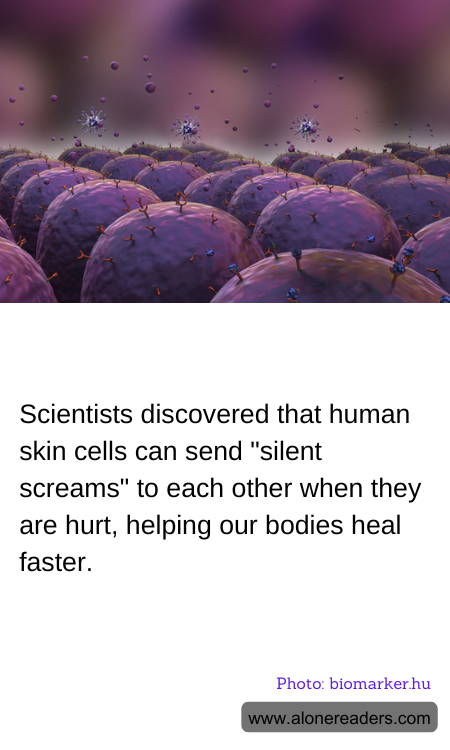
In a groundbreaking study, scientists have unearthed that human skin cells are capable of sending distress signals, akin to "silent screams," when they are damaged. This fascinating discovery sheds light on the complex communication network cells utilize to initiate the healing process. When skin cells experience physical harm through cuts, burns, or other injuries, they release a variety of chemical signals. These signals serve as an alarm system, prompting surrounding cells to spring into action and commence the healing process.
This intricate signaling mechanism involves molecules known as ATP (adenosine triphosphate) and calcium ions among others, which play pivotal roles in cellular communication. The ATP molecules, often referred to as the 'energy currency' of the cell, are repurposed during injury as a distress signal. These molecules are rapidly released by damaged cells and detected by neighboring cells, which in response, increase their calcium ion concentrations. This rise in calcium levels triggers a cascade of cellular activities, including cell migration and division, which are essential for tissue repair and wound closure.
What's particularly intriguing about this discovery is that it highlights the proactive nature of skin cells in preserving tissue integrity and promoting rapid healing. Previous understanding of cellular responses to injury was limited to passive roles where cells merely responded to inflammation or infection. However, the new findings indicate that cells actively communicate and coordinate an organized response to damage.
The concept of cells sending 'silent screams' offers a vivid metaphor for the urgency and immediacy with which our body’s cellular community responds to injury. By further understanding these communication pathways, new treatments could be developed to enhance healing in patients with wounds that heal slowly, such as in diabetic ulcers or in aging populations.
Moreover, this research potentially opens new avenues in tissue engineering and regenerative medicine. By mimicking or enhancing these natural cellular communications, scientists could improve the efficiency of artificial tissues or develop better methods that facilitate faster and more effective healing in various medical treatments.
Overall, the discovery that skin cells can communicate distress through 'silent screams' not only deepens our understanding of human biology but also holds promise for revolutionary advancements in medical science, particularly in the areas of wound healing and regenerative therapies. As research in this field continues to evolve, it could lead to significant improvements in healthcare and treatment outcomes for a wide range of conditions.
