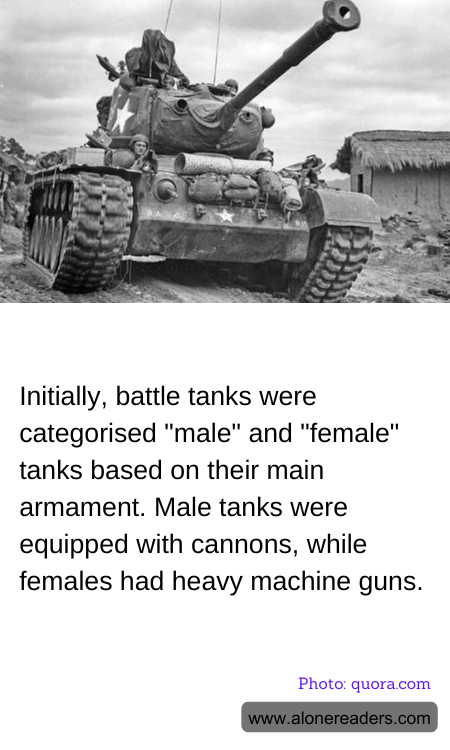
In the early years of tank development, particularly during World War I, military strategists and engineers experimented with various classifications and designs to maximize effectiveness on the battlefield. Among these innovations was the distinction between "male" and "female" tanks, a categorization based on the type of armament each tank carried. This nomenclature, though archaic by modern standards, played a significant role in the deployment and operational use of tanks in the war.
Male tanks were outfitted with heavier, larger-caliber cannons that were capable of firing explosive shells. These tanks were designed for engaging enemy fortifications, artillery, and other hard targets. Their main cannons made them particularly effective at breaking through defensive lines and providing support for infantry assaults. The firepower that male tanks brought to the field was crucial in the early tank battles, where their ability to destroy enemy bunkers and defenses often determined the success of a military offensive.
On the other hand, female tanks were equipped with multiple machine guns and were primarily used for infantry support. The rationale for this armament was that the lighter, more nimble female tanks could provide a high volume of suppressive fire against enemy troops, thereby protecting the more heavily armed male tanks and supporting advancing soldiers. By clearing trenches and suppressing enemy infantry with their machine gun barrages, female tanks played a vital role in maintaining the momentum of an attack.
This distinction between male and female tanks reflected the tactical diversity and adaptability that early military commanders sought in armored warfare. It was thought that having specialized armaments would allow for more tactical flexibility and better support diverse combat scenarios. As tank design advanced, the clear distinctions between male and female tanks began to blur. The development of universal or "hermaphrodite" tanks, which carried both cannons and machine guns, eventually made the separate classifications obsolete.
The evolution from gendered to more versatile tank models in subsequent conflicts underscored the rapid pace of technological and tactical innovation characteristic of the 20th century's warfare. The legacy of these early tank classifications highlights not only the experimental nature of World War I technology but also the strategic foresight early military planners had in adapting to the new challenges of mechanized warfare. This transition mirrored broader shifts in military tactics and the roles armored vehicles would play in future conflicts, where mobility, firepower, and multi-role capabilities became paramount.
