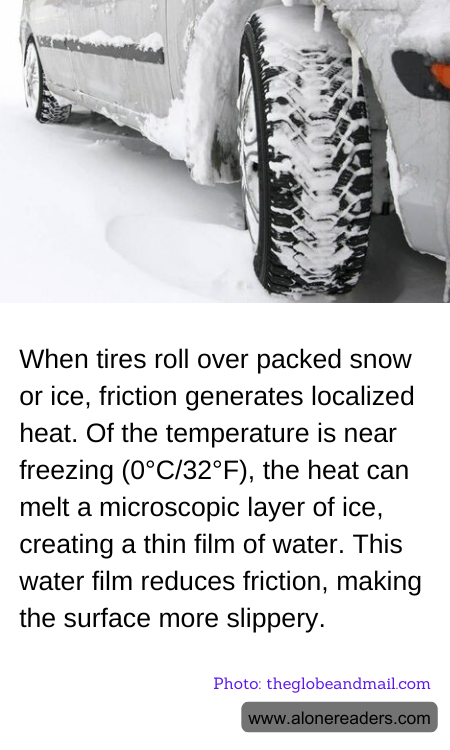
When temperatures hover near the freezing point, seemingly minor environmental changes can significantly impact traction and safety on roads covered with packed snow or ice. Tires traveling over these surfaces generate heat due to friction. Although this amount of heat is typically minimal, it can be sufficient to melt a very thin layer of the ice. This process creates a slippery, water-lubricated interface between the tire and the ice, effectively reducing friction.
This reduction in friction poses a substantial hazard, as it decreases the effectiveness of vehicle brakes and the ability of tires to maintain grip, increasing the risk of slides and accidents. Additionally, this phenomenon complicates walking on icy surfaces, as the thin layer of water makes it difficult for the soles of shoes to securely engage with the ice.
Addressing this issue, road safety experts recommend the use of winter tires, which are specifically designed to combat lessened friction by featuring specialized tread patterns and rubber compounds that remain more flexible in cold weather. These adaptations increase the tire’s ability to interlock with textures in the ice and snow, enhancing traction. For particularly treacherous surfaces, adding chains to tires or using sand, salt, or chemical de-icers can also help by breaking down the ice or increasing the coarseness of the surface for better traction.
Understanding the complex interplay of temperature, ice, and tire technology is crucial for safely navigating winter roads. Awareness and preparedness, based on how ice and snow interact with different surfaces and temperatures, can help reduce winter weather-related mishaps.
