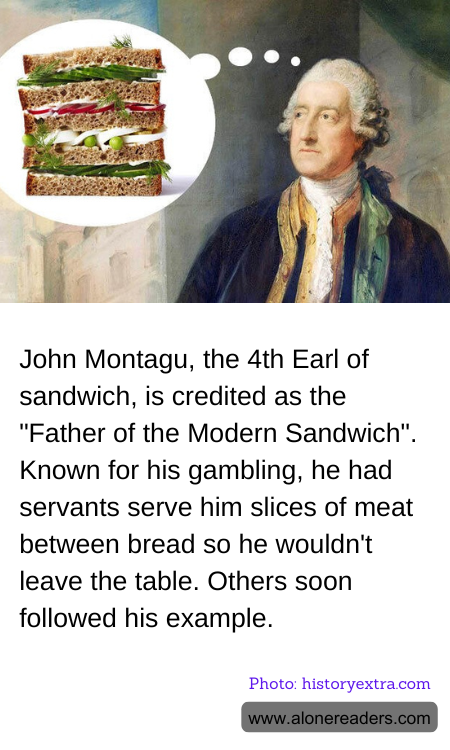
John Montagu, the 4th Earl of Sandwich, indeed left an indelible mark on culinary history, albeit from an unlikely origin. A notorious gambler, Montagu often found himself unwilling to take meal breaks during long hours at the card table. His solution was both simple and ingenious: he instructed his servants to serve him slices of meat tucked between pieces of bread. This innovation allowed him to eat with one hand and continue his game uninterrupted. The convenience and efficiency of this eating style caught on quickly among his peers, leading to widespread imitation.
As word spread of Montagu's eating habits, so did his unintended creation: the sandwich. It became a popular quick meal in England and soon after, around the world. The beauty of the sandwich lies in its adaptability – it can be crafted from virtually any ingredients and tailored to fit any taste or dietary requirement. From the classic English cucumber sandwich to the substantial American submarine sandwich, the varieties are as endless as they are delicious.
The sandwich not only altered the landscape of casual dining but also reflected broader social changes. With the rise of the Industrial Revolution, workers needed quick, portable, and inexpensive meals that could be eaten during short breaks, and the sandwich ideally met these needs. Today, the sandwich continues to be a global staple, beloved for its versatility and convenience. Thanks to the 4th Earl of Sandwich, what began as a means to sustain gambling marathons has evolved into one of the world's most popular types of food. Thus, John Montagu's gastronomic legacy lives on, making the Earl not just a figure in gambling lore but a pivotal figure in the evolution of dining on-the-go.
