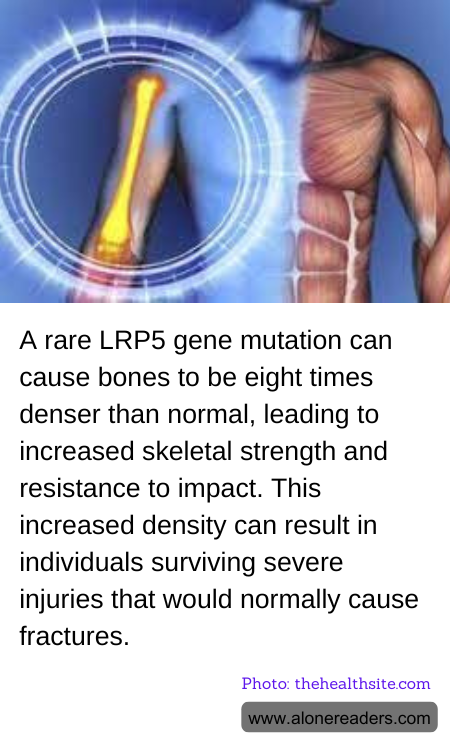
Genetic anomalies often present themselves in a spectrum of manifestations, from the inconspicuous to the extraordinary. One remarkable example is found in the rare mutation of the LRP5 gene. Known primarily for its critical role in bone density regulation, mutations in the LRP5 gene can drastically affect skeletal strength and density. In instances where the mutation amplifies the gene's function, individuals have been observed to possess bones with densities up to eight times higher than the average person. This significant increase in bone density affords an unparalleled resistance to fractures and other injuries that would typically break normal bones.
The LRP5 gene functions as a co-receptor in the Wnt signaling pathway, a fundamental cascade that influences bone mass and structure by regulating osteoblast activity (bone-building cells). When mutated, this gene can enhance the Wnt signaling pathway, leading to an overproduction of bone mass. This rare condition, often referred to as high bone mass (HBM) phenotype, is not only about stronger bones. For those with the mutation, it means being inherently equipped with a kind of biological armor, capable of withstanding severe impacts that might severely injure others.
Interestingly, while increased bone density may suggest fewer fractures, it is not without potential health implications. For example, excessive bone density could potentially lead to joint issues due to the abnormal load and altered mechanics of joint movement. Moreover, the extraction of teeth and other surgical procedures involving drilling into the bone may become more complicated due to the increased hardness of the bone.
The scientific and medical communities continue to study these mutations not only to understand their implications better but also to explore how these insights could translate into treatments for osteoporosis and other bone-density-related conditions. There is also growing interest in how this mutation might provide clues into enhancing durability in other tissues or even synthetic materials, demonstrating how a rare genetic mutation offers not just an insight into human biology but potentially broad-reaching applications in medicine and materials science.
Examining individuals with this LRP5 mutation provides invaluable insight into the genetic factors that contribute to bone density, potentially paving the way for innovative treatments that could benefit millions suffering from bone density deficiencies worldwide. This example of incredible human resilience highlights the complex interplay between our genetic makeup and its expression, continuing to fuel both curiosity and scientific advancement.
