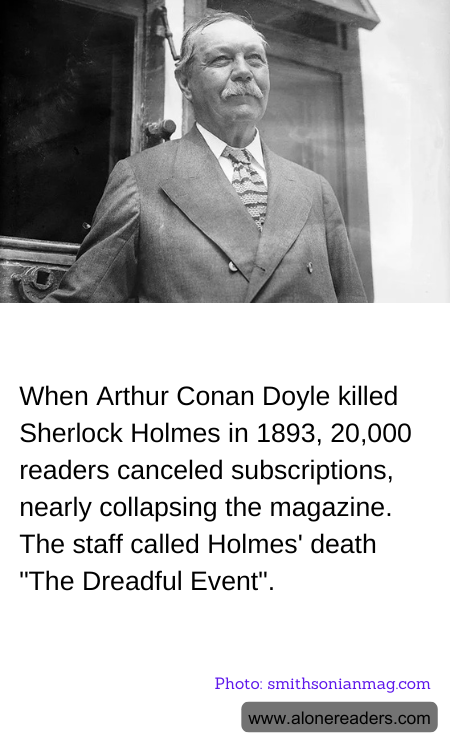
In 1893, Sir Arthur Conan Doyle made a decision that sent shockwaves through the literary world and beyond—he killed off Sherlock Holmes, his most famous character. Holmes, who first appeared in print in 1887, had quickly become a beloved fixture in the lives of readers who eagerly awaited his latest adventure in the pages of 'The Strand Magazine'. The detective's seemingly fatal confrontation with his nemesis, Professor Moriarty, at the Reichenbach Falls in "The Final Problem" was intended by Doyle to be the definitive end to his sleuthing tales. Little did Doyle anticipate the public outcry that would follow.
The response to Holmes' demise was profound and immediate. Upset and angry readers expressed their dismay through letters and widespread media criticism, and the impact was so significant that it even affected the business of 'The Strand Magazine'. Approximately 20,000 readers canceled their subscriptions in protest, a staggering number that nearly led to the magazine's financial collapse. The staff at the magazine ruefully referred to the incident as "The Dreadful Event," a testament to the intensity of the backlash.
Doyle had hoped to focus on more serious literary endeavors, but the pressure and reaction from the public proved too great. Bowing to popular demand, he masterfully orchestrated Holmes' return in 1901 with "The Hound of the Baskervilles," set before Holmes' fatal encounter. This was followed by "The Adventure of the Empty House" in 1903, where Holmes spectacularly reappears, revealing that he had faked his death to fool his enemies. This revival was met with great enthusiasm and relief from fans, restoring 'The Strand's subscriptions and further cementing Sherlock Holmes as an immortal character in the annals of literary history.
Doyle’s experience is a potent example of the powerful bond between a creator and their audience, highlighting how deeply fictional characters can resonate and the unexpected ways in which audiences can influence narratives. The incident serves as an early illustration of fan influence on storytelling, a phenomenon that has only grown with the advent of modern fandoms across various media platforms.
