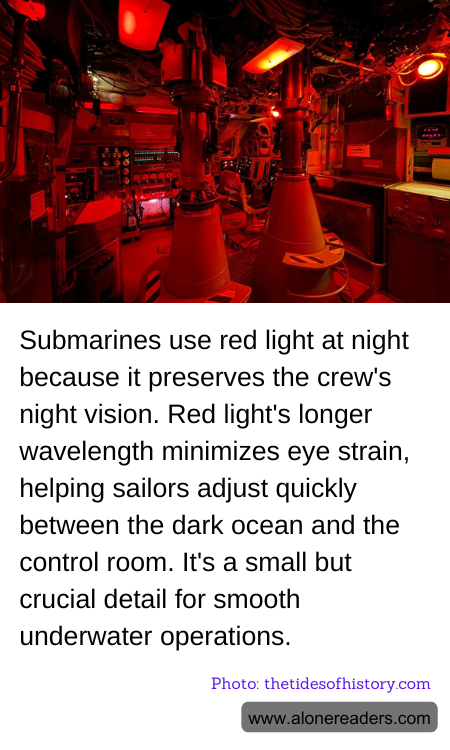
Submarines operate in an environment where preserving night vision is crucial for the crew's safety and effectiveness. To this end, submarines employ red lighting in control rooms during nighttime operations. The choice of red light is strategic, tied to the way human vision works under low-light conditions. The human eye is less sensitive to red light, and it does not significantly affect the rod cells in the eye, which are responsible for night vision. Red light has a longer wavelength, which is less likely to cause the pupil to constrict. This allows submariners to maintain their acclimatization to the dark when moving between brightly lit and dimly lit areas, or when looking out into the dark ocean.
The use of red lighting is not just about physical eye health; it also enhances operational efficiency. Quick adjustment to various lighting conditions is essential when operating a submarine, as crew members frequently need to monitor digital displays and then engage with their environment, which can be pitch dark when outside of artificially lit areas. By minimizing the time required for eyes to adapt between different light levels, red light helps in reducing visual fatigue and maintaining alertness during long hours of operation.
This practice exemplifies the attention to detail required in submarine design and operation, where even the choice of lighting color can have significant repercussions on crew safety and mission success. Thus, the use of red light is a small, yet fundamentally important, aspect of the unique and challenging environment of submarine operations, ensuring that crew members can perform their duties effectively without compromising their visual capabilities.
