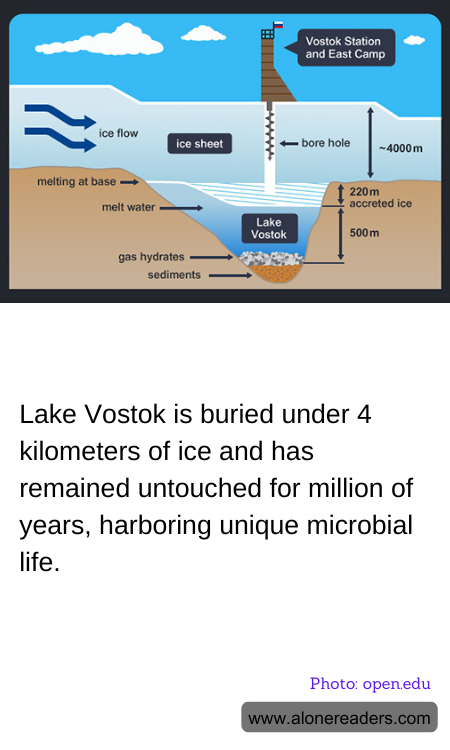
Lake Vostok, located beneath Antarctica's icy surface, is one of the largest subglacial lakes in the world. Hidden under approximately 4 kilometers of ice, it has been sealed off from the outside environment for around 15 million years, creating a unique and pristine ecosystem. This isolation has sparked considerable scientific interest because the extreme conditions of the lake might closely mimic environments on other planets and moons, such as Europa, one of Jupiter’s moons, providing clues to extraterrestrial forms of life.
The discovery of Lake Vostok is a relatively recent event. Russian scientists confirmed its existence in 1996, using radar data to map the lake which stretches over 240 kilometers in length and reaches depths of about 800 meters. The lake is believed to contain microbial life that has evolved in isolation, adapting to its cold, dark, and high-pressure environment. These adaptations may include novel biochemical pathways and life-sustaining strategies not found in organisms living in less extreme conditions.
Despite the excitement surrounding these possibilities, the exploration of Lake Vostok presents significant technical and environmental challenges. The main concern is avoiding contamination of this pristine environment with microbes and chemicals from the surface. Russian scientists initially drilled into the lake in 2012, and they claimed to have found bacterial DNA; however, some critics suggest that these findings might be the result of contamination.
Further sampling and research are necessary to provide more definitive evidence of life and to understand the types of organisms that inhabit Lake Vostok. Such studies hold the potential to revolutionize our understanding of biogeography and the adaptability of life. Research in Lake Vostok and other subglacial lakes might help to uncover the limits of life on Earth, providing insights into not only how life can exist in extreme conditions on other planets but also offering clues about the Earth’s own climatic and geological history. Undoubtedly, Lake Vostok is a captivating frontier for scientific exploration and discovery.
