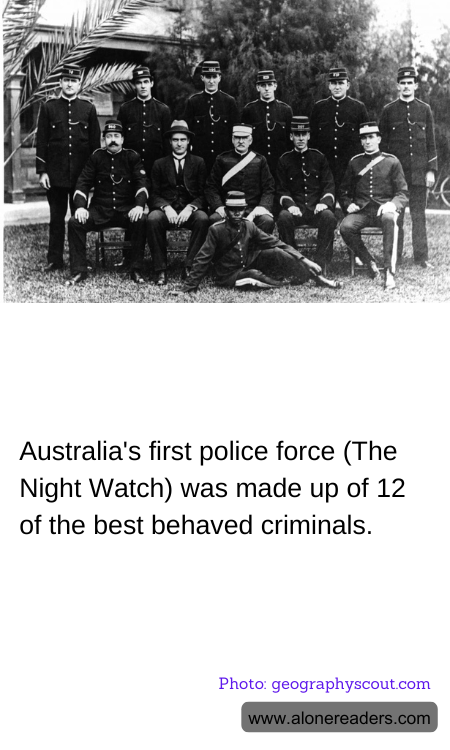
In the history of law enforcement, Australia presents a unique case where the first police force was indeed composed of convicts. Formed in 1789, this force, known as "The Night Watch," operated in the colony of New South Wales, which was then largely populated by convicts transported from Britain. At its inception, the force consisted of just 12 members, who were selected based on their behavior and perceived reliability. This decision was driven by sheer necessity. Governed by Captain Arthur Phillip, the new colony lacked sufficient manpower and resources, forcing Phillip to make do with the human resources at his disposal. These individuals, though convicts, represented a pool of personnel from which to draw for various needs, including maintaining order.
The Night Watch's primary role was to maintain public order in the settlement after dark. Given the harsh and often lawless conditions of early colonial life, the formation of such a force was crucial for the establishment of a rudimentary form of structured society. The members of the Night Watch were tasked with patrolling the streets, controlling theft and other forms of civil disorder, which were rampant at the time. Their establishment marked the beginnings of structured law enforcement in Australia, which has evolved significantly over the centuries.
Australia's early use of convicts in police roles highlights the adaptability and pragmatism of colonial administration under challenging and unprecedented conditions. Over time, as the colony stabilized and grew, a more formal and traditional police force was developed. This transition included the establishment of the New South Wales Police Force in 1862, which followed more conventional norms and practices of law enforcement.
The story of The Night Watch is often seen as an intriguing footnote in the annals of policing history, reflecting a period when the boundaries between criminality and law enforcement were particularly fluid. It underscores the complexities of establishing law and order in a fledgling penal colony and highlights the transformative paths individuals might take when placed in unique societal roles. Despite their origins, these first police officers played a foundational role in the establishment of law enforcement structures that continue to serve Australia today.
