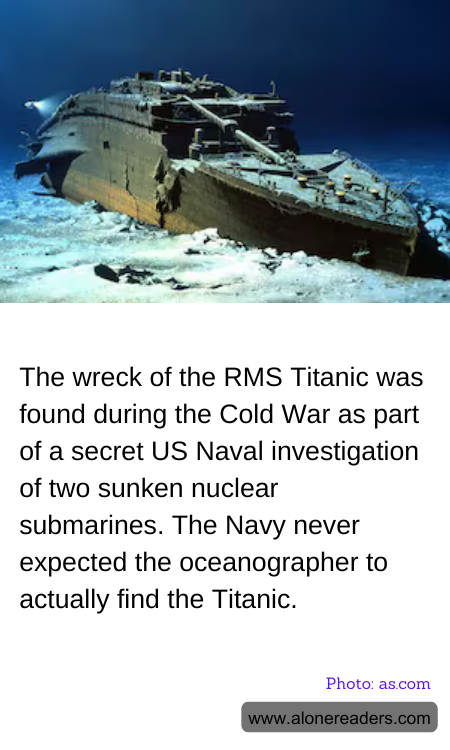
The discovery of the RMS Titanic in 1985 by a team led by oceanographer Robert Ballard was an event that captured the global imagination due to its tragic history and mysterious demise. However, the story behind this discovery includes a fascinating blend of Cold War military intrigue and advanced scientific research. The expedition that eventually located the Titanic wreckage was not originally planned for that purpose. It was, in fact, part of a covert US Navy mission.
During the Cold War, the ocean depths were strategic domains just as crucial as the surface above. The US Navy, interested in the implications of its lost nuclear submarines—the USS Thresher and the USS Scorpion—sought to locate these wrecks and understand their fates. The condition of these submarines needed to be assessed to ensure the nuclear reactors and warheads were not posing a risk to the environment or a security threat if discovered by rival powers. It was under the guise of this mission that the Navy approached Dr. Ballard and his team, providing them with the necessary funds and technology under the condition that he first looked for these nuclear submarines.
The technology used was at the cutting edge of underwater exploration. Ballard's team employed a remotely operated vehicle (ROV) named Argo, equipped with sonar and cameras capable of operating at great depths and sending real-time images back to the research vessel. After completing the primary military mission, Ballard used the remaining time to pursue his long-standing interest in locating the Titanic. The Navy, perhaps sceptical about the likelihood of finding the Titanic, agreed to this secondary objective.
To the surprise of many, especially within the naval ranks, Ballard's team succeeded in locating the Titanic's wreck about 370 miles off the coast of Newfoundland, over 12,000 feet beneath the surface. This discovery was not only a significant achievement in the field of marine archaeology but also a demonstration of how military and scientific interests can intersect in unexpected ways. The initial secrecy surrounding the true nature of the mission continued until after the Cold War, preserving the dual narratives of military reconnaissance and scientific exploration.
This blend of objectives during the Cold War showcases how geopolitical tensions often propel technological and scientific advancements. The discovery of the Titanic, while a serendipitous outcome of a military expedition, opened new chapters in underwater exploration and deep-sea research, altering our understanding of the ocean's mysteries. The mission's success exemplified how even within the framework of military endeavors, there can exist opportunities for profound historical and scientific discoveries.
