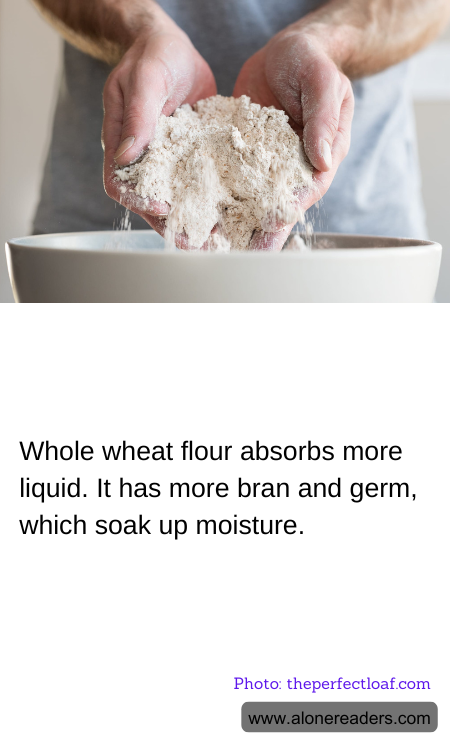
Whole wheat flour, cherished for its nutritional benefits, differs significantly from its refined counterpart, not only in flavor and texture but also in how it interacts with liquids in baking and cooking. Enriched with the entire grain—including the bran, germ, and endosperm—whole wheat flour retains all its natural nutrients and fibers, which starkly contrasts with white flour that only contains the endosperm.
The unique composition of whole wheat flour, particularly the presence of bran and germ, means it absorbs more moisture compared to refined flours. The bran, which is the grain's outer layer, is rich in fibers that are particularly adept at soaking up liquids. This higher absorption rate has key implications for baking and cooking. When substituting whole wheat for white flour, additional liquid may be necessary to achieve the desired consistency and to prevent the dough or batter from being too dry.
The germ also influences how whole wheat flour behaves with moisture. It contains oils that can contribute additional moisture but also makes the flour more prone to rancidity if not stored properly. Because of these characteristics, recipes need to be adjusted not only for additional liquid but also for potential alterations in fat content and shelf life.
The increased liquid absorption capacity of whole wheat flour ensures that baked goods made with it might require more patience and practice to perfect. Breads, muffins, and other items tend to be denser and heavier than their white flour counterparts. However, the rich, nutty flavor and additional health benefits—such as higher protein, fiber, vitamins, and minerals—make it a favorite among health-conscious bakers and consumers.
To work successfully with whole wheat flour, bakers often mix it with white flour to lighten the texture of the final product, gradually increasing the proportion of whole wheat as they become more accustomed to its properties. Hydration techniques, like letting the dough rest longer so the grains absorb the liquid more fully, are also common. Understanding and mastering these adjustments can lead to healthier and satisfying results in the kitchen.
