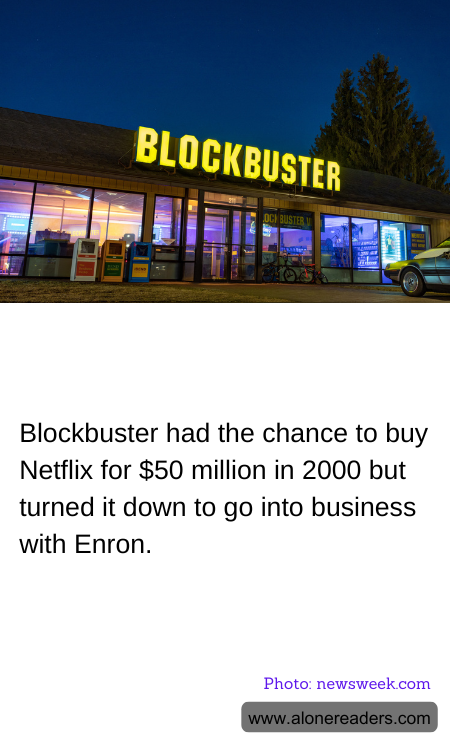
In the year 2000, Blockbuster, then a giant in the video rental industry, faced an opportunity that could have dramatically altered the future of home entertainment. Netflix, at that time a budding DVD-by-mail rental service, was offered to Blockbuster for $50 million. This pivotal moment came at a time when Blockbuster was at its peak, boasting thousands of stores globally and enjoying substantial revenue from late fees, a cornerstone of its business model.
Unfortunately for Blockbuster, the decision to not acquire Netflix would later haunt the company. Instead of seizing this forward-looking opportunity, Blockbuster entered into a partnership with Enron Broadband Services. This move, aimed at venturing into on-demand movie streaming, showcased Blockbuster's attempt to innovate beyond the traditional rental model. However, the partnership with Enron soon faltered as Enron itself collapsed in one of the most infamous corporate scandals in history. The failure of this venture left Blockbuster lagging behind in the rapidly evolving market of digital streaming.
Netflix, on the other hand, moved away from its initial DVD rental business model, embracing streaming technology and eventually transforming into a powerhouse of online entertainment. It reinvented how content is consumed globally, moving from distributing existing movies and shows to producing original content. Today, Netflix stands as a behemoth in the streaming industry, often cited as a primary example of digital disruption.
Blockbuster's inability to foresee the potential of digital streaming and its implications on the video rental industry reflects a significant misjudgment. As Netflix grew exponentially, Blockbuster's business model became increasingly obsolete. The company began closing stores and in 2010, it filed for bankruptcy. A series of attempts to revive the brand through streaming services were too little too late, as Netflix and other platforms like Amazon Prime and Hulu had already dominated the market.
This story serves as a powerful lesson on the importance of innovation and adaptability in business. Blockbuster's decision to stick with its traditional operations and overlook the digital transformation led to its downfall, while Netflix's proactive approach in embracing and shaping new technology led to its success. The contrasting fates of the two companies highlight the critical need for businesses to anticipate changes in consumer behavior and technology trends, adapting swiftly to maintain competitive advantage.
