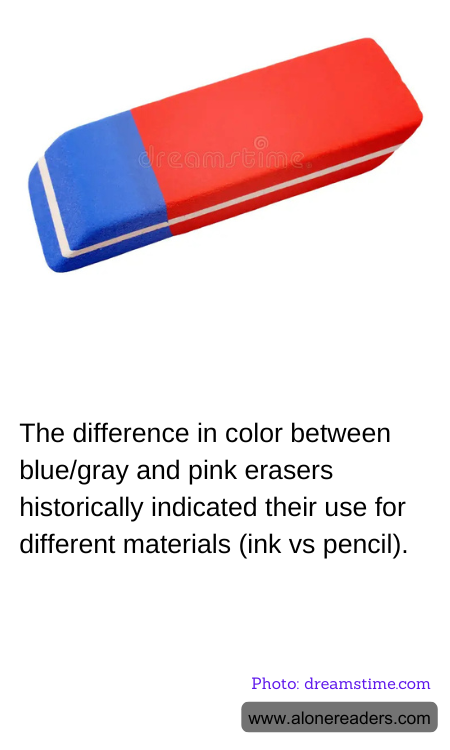
Traditionally, the common pencil erasers that most people are familiar with come in various colors, with pink and blue/gray being particularly notable. These colors aren't just for aesthetic variation but historically indicated the eraser’s intended use. Pink erasers, made from a soft, pliable rubber, are designed primarily for erasing pencil marks. These erasers are gentle on paper and are effective at lifting graphite from the surface without tearing it. That's why they are commonly found on the end of pencils and are a staple in classrooms and offices.
On the other hand, the blue or gray erasers are slightly harder and have a different composition, often being stiffer. Historically, these erasers were marketed for erasing ink marks, including those from ballpoint or fountain pens. The idea was that the tougher rubber could handle the more resistant ink stains, though with varying degrees of success. It's important to note that erasing ink without damaging the paper is a challenging task, and while blue/gray erasers could sometimes lighten ink marks, they could also roughen the paper surface, leading to damage.
In modern times, the distinction between these erasers has become less significant due to improvements in eraser technology and the reduced use of pens that make permanent marks difficult to erase, like fountain pens. Moreover, there are now specialized products available for erasing ink, such as ink eradicators or friction erasers that use heat generated by rubbing to turn the ink invisible.
Nonetheless, the historical color coding of pink for pencil and blue/gray for ink serves as a reminder of the evolving nature of everyday objects like erasers. The design and utility of such seemingly mundane items were carefully considered, reflecting the needs and technological limits of their time.
