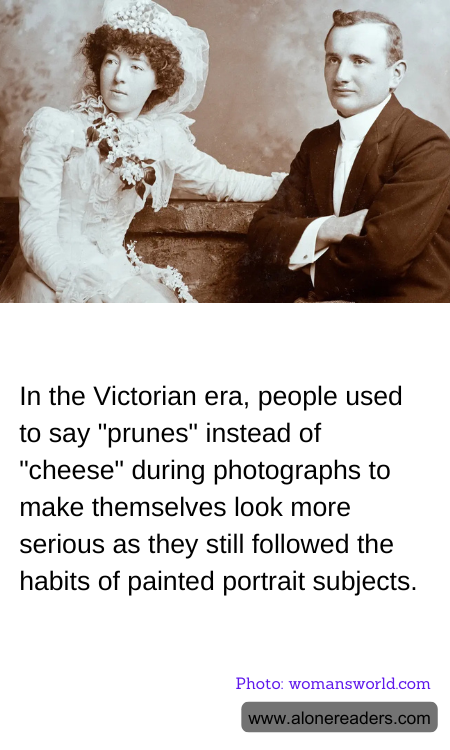
During the Victorian era, the act of photography was imbued with a certain level of formality and gravity, reflecting broader societal attitudes toward art and self-presentation. Unlike today’s casual snapshots, taking a photograph in the 19th century was an event that required preparation and solemnity. This approach was heavily influenced by the long-standing tradition of portrait painting, where subjects often adopted serious expressions to convey dignity, respectability, and status. These qualities were highly valued in Victorian society.
While modern-day subjects often smile and say "cheese" to create a cheerful, friendly photograph, Victorians approached the camera quite differently. They were more likely to say "prunes," prompting them to purse their lips into a small, controlled expression. This practice helped maintain a neutral and more serious facial expression, aligning with the era's aesthetic principles and social norms which favored a composed and formal demeanor over the display of emotion or frivolity often conveyed by a smile. The saying of "prunes" helped tighten the mouth and elongate the face, which was believed to be more flattering in photographs.
Photography during this period was also influenced by technical constraints. Early photographic equipment required subjects to remain still for extended periods to avoid blurring the image. A serious, immovable expression was easier to hold steady compared to a smile, thus ensuring a clearer, sharper final product. Additionally, the high cost and rarity of photographic portraits lent the process an air of significance and sobriety — it was not uncommon for a photograph to be a once-in-a-lifetime affair, encouraging a demeanor that was dignified and thoughtfully composed.
Therefore, the tradition of saying "prunes" captures more than just a stylistic preference; it reflects the intricate weave of technology, culture, and social mores of the time. The impact of these practices continues to influence how we perceive Victorian culture and portraiture today, underlining the era's characteristic blend of austerity and elegance.
