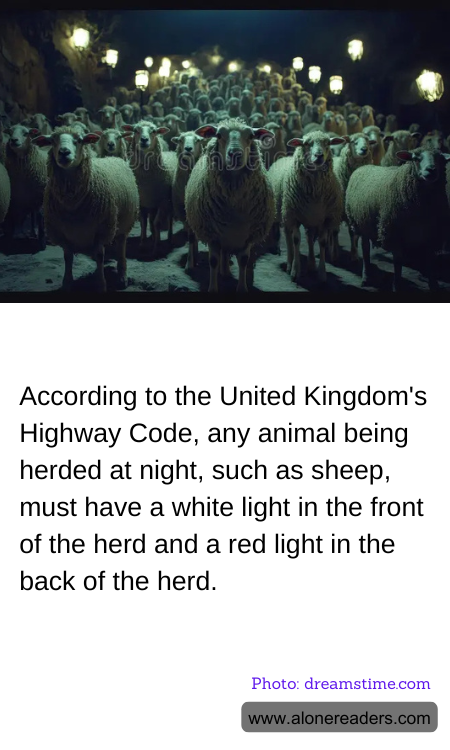
In the United Kingdom, specific rules and guidelines have been established to ensure safety on public roads, not just for vehicle drivers and pedestrians but also for animals. One such interesting regulation involves the herding of animals like sheep, especially under the cover of darkness. The Highway Code stipulates that any group of animals being moved at night must be clearly visible to all road users to prevent accidents and ensure the safety of both the animals and people.
To achieve this, the rule mandates that a white light should be placed at the front of the herd and a red light at the rear. This requirement mirrors the lighting system used in vehicles, where white headlights illuminate the road ahead and red taillights indicate the back of the vehicle. By using this system, drivers quickly recognize the presence and direction of the herd, just as they would with other road users.
This particular regulation showcases the careful consideration given to rural practices within road safety laws, acknowledging the frequent intermingling of pastoral activities with vehicular traffic in the countryside. The use of white and red lights not only enhances safety but also helps in minimizing traffic disruption and preventing potential road accidents. It ensures that farmers can continue their age-old practices without posing undue risks to themselves, their livestock, or other road users.
Moreover, it is essential for farmers and herders to comply with these regulations and for drivers to be aware of such potential occurrences, particularly in rural areas where such movements are common. Familiarity with these rules can greatly contribute to preventing mishaps and ensuring that both modern and traditional practices coexist harmoniously within a shared environment. This example from the UK's Highway Code is a testament to the thoughtful integration of diverse daily activities into the legal and safety frameworks governing road use.
