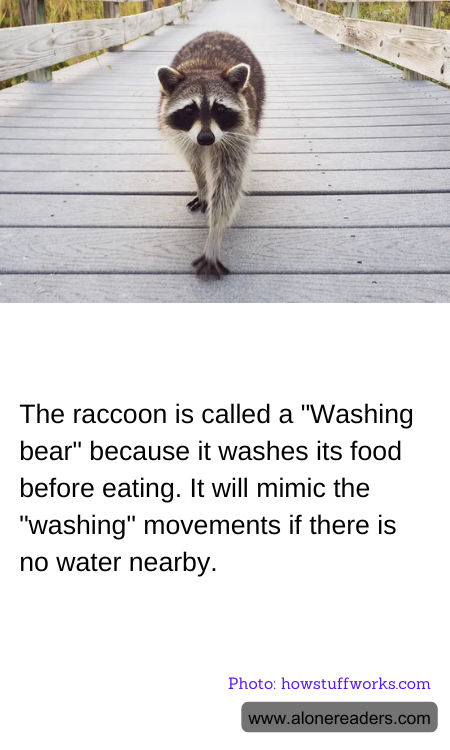
Raccoons are fascinating creatures often noted for their unique behavior of "washing" their food before eating. This name derives from their German name, “Waschbär,” which literally translates to "wash bear," reflecting their apparent habit of cleaning their food in water. This behavior is not actually about hygiene but rather is a complex behavior that is believed to be linked to their tactile sense. Raccoons have highly sensitive front paws and wetting the food enhances their sense of touch, helping them to better understand what they're about to eat.
Interestingly, even when water is not available, raccoons will still go through the motions of washing their food, performing a rubbing action that mimics the washing movement. This suggests that the behavior is deeply embedded in their natural instincts. Such actions might also help them to remove unwanted parts of their food, like dirt or outer shells, which isn't strictly "washing," but does serve a practical purpose in preparing the food for consumption.
In urban areas, raccoons have adapted this behavior to utilize puddles, ponds, or even leftover water in discarded containers as their places to "wash" food, demonstrating their ability to adapt to varied environments. While this behavior is endearing and has even become a popular reason behind videos and memes across the internet, it also underscores the raccoon's intelligence and its ability to use its paws almost like hands.
Moreover, raccoons are omnivores, meaning they eat both plants and animals. The "washing" behavior can help them to handle slippery or wet food items more effectively, which is especially useful given their diverse diet. It is a remarkable example of how animal behaviors can be misunderstood as purely habitual or unnecessary when in fact they play a critical role in the animal’s ability to interact with their environment and to feed effectively. Their remarkable adaptability and dexterity make raccoons a subject of interest not only to the casual observer but to scientists studying animal behavior and evolution.
