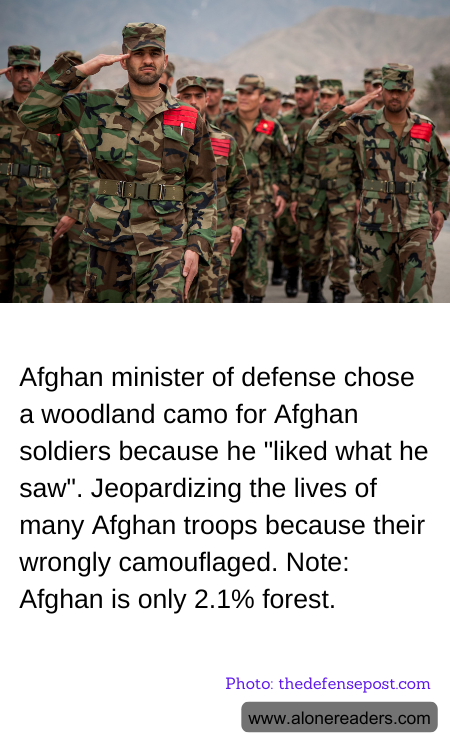
In a controversial decision, the Afghan Minister of Defense selected woodland camouflage uniforms for the Afghan military, a choice seemingly based on personal preference rather than strategic considerations. This decision has sparked considerable debate, as Afghanistan's landscape is primarily comprised of deserts and mountains with only about 2.1% of the country covered in forest. Thus, the effectiveness of woodland camouflage in such a terrain is minimal, potentially placing soldiers at higher risk in combat situations.
Camouflage plays a crucial role in military operations, providing soldiers with concealment and increasing their chances of survival on the battlefield. Effective camouflage should seamlessly blend with the surrounding environment, making troops less visible to enemy forces. The choice of woodland camo in a predominantly arid and mountainous country like Afghanistan undermines these basic tactical principles.
This situation highlights a broader issue of decision-making in military procurement, where the necessity of aligning equipment choices with practical battlefield requirements is sometimes overshadowed by less relevant factors, such as aesthetic preferences or bureaucratic influences. The repercussions of such decisions can be severe, impacting the safety and effectiveness of military personnel.
Experts argue that the use of inappropriate camouflage could easily compromise the stealth and security of Afghan troops, making them easy targets in their typical operational environments. The decision has been met with criticism from military strategists and veterans who believe that it shows a lack of consideration for the challenging conditions faced by Afghan soldiers and the fundamental principles of military readiness and defense strategy.
Moving forward, it is essential for military leaders to base equipment decisions on thorough research and a clear understanding of the operational landscape. Aligning gear and uniforms with the environment not only increases the operational effectiveness of the military forces but also ensures the safety and security of personnel engaged in ground operations. By focusing on practical and strategic needs over personal preferences, defense ministries can better equip their soldiers to face the multifaceted challenges of modern warfare.
