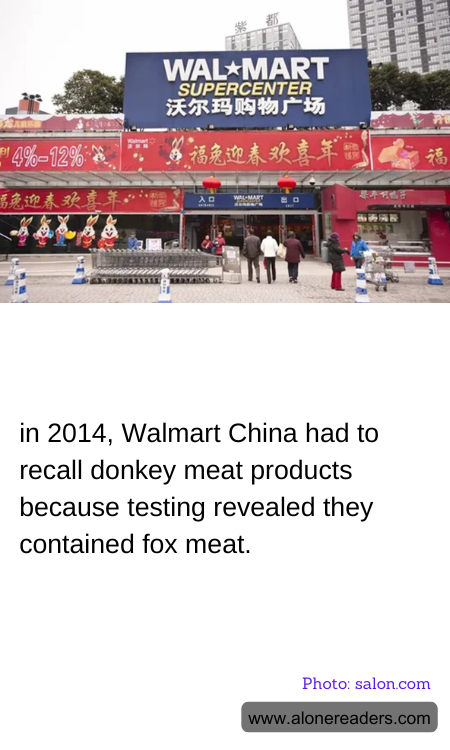
In a surprising turn of events that highlighted issues of food safety and mislabeling, Walmart China faced a significant consumer trust setback in 2014. The retail giant was compelled to recall its "Five Spice" donkey meat product after tests conducted by the Shandong Food and Drug Administration revealed the presence of fox DNA. This discovery not only sparked a public outcry but also brought to light the challenges within supply chains in the region.
Donkey meat, a delicacy in some parts of China, is prized for its flavor and purported health benefits. However, the adulteration of this product with cheaper fox meat undermined consumer confidence and raised concerns about food authenticity and safety standards. Walmart responded promptly to the scandal by apologizing to its customers and initiating a recall of the tainted product. They also took steps to tighten quality control, promising to ensure the integrity of their supply chain and to increase DNA testing of meat products.
The incident had broader implications for the food industry in China, particularly regarding the traceability and reliability of source materials. It underscored the growing problem of food fraud, prompting both government and industry leaders to look more closely at regulatory practices and enforcement mechanisms. For Walmart, this was not just a logistical and financial setback but also a crucial test of its ability to manage crises and protect its brand image in a critical international market. The recall forced Walmart and other corporations to scrutinize and often revamp their supply chain management strategies and consumer safety protocols, reflecting an urgent need for improved standards and greater transparency in food production and distribution.
