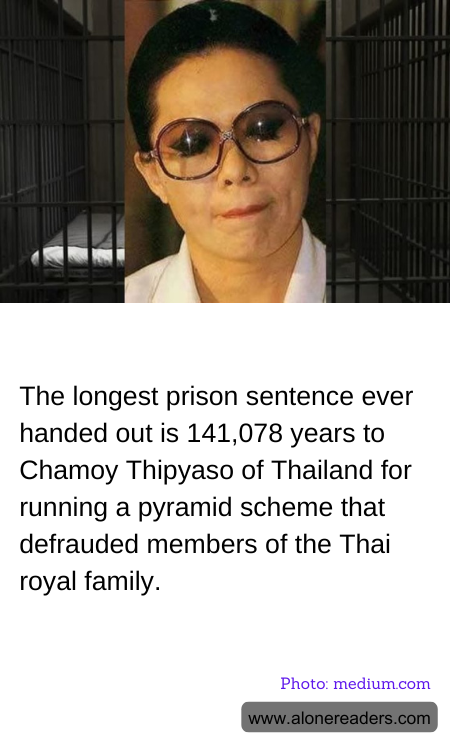
In an astounding instance of judicial severity, Thailand’s legal system made headlines around the world when it handed Chamoy Thipyaso a prison sentence of 141,078 years in 1989. This sentence is often cited as the longest prison sentence ever given in history. Thipyaso, along with her accomplices, was convicted of perpetrating a massive pyramid scheme, which over the course of its operation, defrauded around 16,000 people, including members of the Thai royal family.
Chamoy Thipyaso was the mastermind behind this fraudulent scheme, which promised lucrative returns on investments in a company purportedly dealing in oil and gas sales. The scheme operated successfully for a while, attracting high-level investors by leveraging the unsuspecting trust of members of Thailand's elite, including those with royal connections. It is believed that this pyramid scheme, one of the largest of its kind at the time, resulted in losses amounting to millions of dollars.
The extraordinary length of Thipyaso's sentence was largely symbolic, as Thai law caps time served at 20 years for multiple fraud charges like those Thipyaso faced. However, the initial figure unmistakably expressed the court's disapproval of her egregious exploitation of high-trust networks for personal gain.
Ultimately, Chamoy Thipyaso was released early, serving only eight years before her release. Despite the dramatic reduction in time served, the record-setting sentence remains a stark reminder of the severe repercussions awaiting those who engage in large-scale financial fraud, especially involving vulnerable or high-profile victim groups.
This case highlights not only the legal boundaries around economic crimes but also the potential societal repercussions of exploiting high trust networks, demonstrating that measures are in place to rigorously punish those who seek to undermine financial systems and betray public or private trust.
