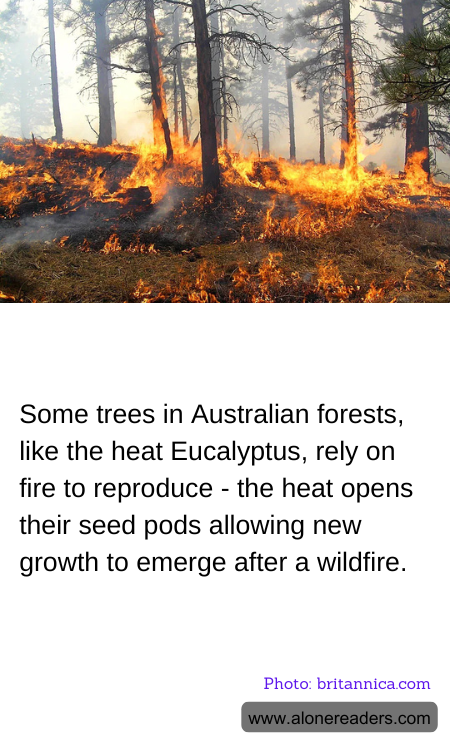
In the fire-prone landscapes of Australia, many native species have evolved remarkable adaptations to survive and even thrive in the wake of wildfires. Among these species, certain types of Eucalyptus trees play a fascinating role in the ecological dynamics of their environment. These trees have developed a unique relationship with fire, wherein their reproductive processes are closely tied to the occurrence of wildfires.
Eucalyptus trees, which dominate much of the Australian forest canopy, possess seed pods that are uniquely adapted to respond to the intense heat generated by wildfires. The extreme temperatures caused by fire help to crack open these tough seed pods, a process which is vital for the release of seeds. This mechanism ensures that seed dispersal coincides with a time when the forest floor is cleared of dense underbrush and competition for resources like sunlight and space is reduced. The ash from the fire also enriches the soil with nutrients, creating highly fertile conditions that are ideal for the germination of new Eucalyptus seedlings.
This fire-dependent germination process is known as serotiny. It is not exclusive to Eucalyptus; several other plant species in fire-prone areas around the world have similar adaptations. However, in the case of the Australian Eucalyptus, the scale and impact of this adaptation are particularly significant. The relationship between Eucalyptus trees and fire is a prime example of how evolutionary pressures can shape the life strategies of species in ways that intricately tie them to their environments.
Despite the benefits that fires can bring to these Eucalyptus trees, there is a delicate balance between fire being a tool for renewal and a destructive force. Wildfires can become too frequent or intense, often as a result of human activities like land clearing and climate change. When this happens, it can disrupt the regenerative cycles of Eucalyptus forests and threaten their survival.
To manage this, controlled burns, also known as prescribed burns, are often used by forest managers and indigenous communities to reduce the fuel load (accumulated vegetation) in the underbrush and help maintain the ecological balance. These controlled fires help mimic the natural fire regimes to which these trees have adapted over millennia, ensuring that Eucalyptus forests remain a resilient and vital component of the Australian landscape.
