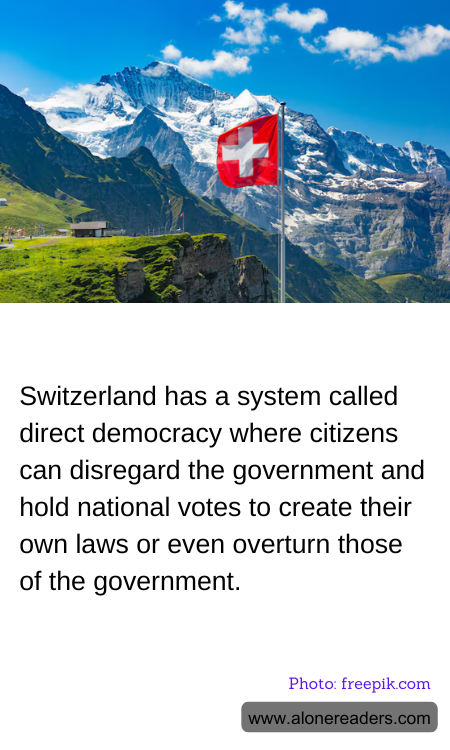
Switzerland stands as a compelling example of direct democracy in action, distinguished by a political system that empowers its citizens to play a crucial role in the legislative process. In this system, not only do citizens have the right to vote in elections, but they can also influence the country's laws directly through referendums and initiatives.
In the Swiss political landscape, any citizen can challenge a law passed by the parliament if they can gather 50,000 signatures within 100 days after the law’s passage. If successful, a national vote is called, and all Swiss citizens have the opportunity to accept or reject the law. This process, known as a "referendum," serves as a potent check on the parliament's power, ensuring that laws reflect the will of the people.
Additionally, the Swiss political system allows for the "popular initiative," where 100,000 citizens can sign a petition to propose a new law or amendment to the constitution. If the required number of signatures is collected, the proposal is put to a national vote. Citizens, therefore, have a direct hand in shaping the legislative framework of the country, proposing laws that reflect their interests and concerns.
This form of participatory democracy has several impactful outcomes. It encourages a high level of political awareness and engagement among the populace, as citizens need to be well-informed to vote on a wide array of intricate issues. Moreover, it arguably leads to more balanced and moderate policies, as the need for a majority vote promotes consensus-building and compromises among diverse political groups.
While direct democracy in Switzerland is lauded for enhancing democratic participation and making the political process more responsive to the needs of the citizens, it is not without challenges. The frequency and complexity of issues put to vote can lead to voter fatigue, and the cost of organizing frequent votes can be substantial. There are also concerns about the influence of powerful lobby groups which can potentially manipulate outcomes by pouring resources into campaigns for or against certain initiatives.
Despite these challenges, Switzerland's model of direct democracy remains a fascinating experiment in self-governance, offering valuable lessons on the benefits and limitations of such a system in fostering a more engaged and informed citizenry. As political landscapes continue to evolve globally, the Swiss example provides a unique perspective on alternative governance models that prioritize direct citizen involvement in legislative processes.
