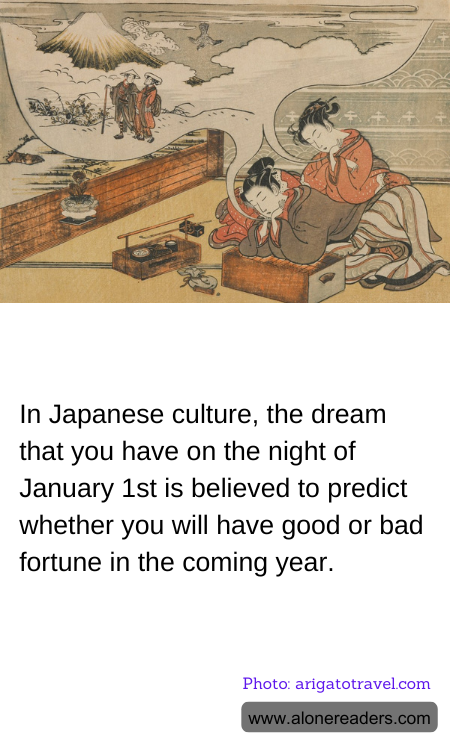
In Japanese culture, there is a fascinating tradition known as "Hatsuyume," which literally translates to "first dream." This tradition holds that the dream a person has on the night of January 1st can foretell the luck that they will experience throughout the coming year. Because of the significance attached to this first dream, many people in Japan pay close attention to the imagery and events that occur in their dreams on this particular night.
The content of the dream is believed to be an omen. There are certain symbols that are considered particularly auspicious if they appear in your Hatsuyume. The most fortunate symbols to see in one’s first dream of the year include Mount Fuji, a hawk, and an eggplant. This trio is known colloquially as "Mount Fuji, the hawk, and the aubergine" and is synonymous with starting the New Year on a high note. Mount Fuji, being the highest and most revered mountain in Japan, symbolizes overcoming challenges and achieving great heights. The hawk is seen as a smart and strong bird, symbolizing wisdom and strength, while the eggplant is believed to ward off evil spirits.
The origins of this tradition are somewhat mixed, with some attributing it to the prosperous Edo period when culture and arts flourished, enabling even common folk to aspire to dreams featuring these auspicious elements. Over time, what appears in one's Hatsuyume has continued to be a popular topic of discussion around the New Year in Japanese households.
In modern times, although many continue to take part in this tradition, the interpretation of these dreams has become less rigid. Some people see Hatsuyume as merely a fun and hopeful way to start a New Year, while others attach genuine significance to their dreams, adjusting their life decisions and outlook accordingly. Moreover, as Japanese society becomes more interconnected with global cultures, new symbols and interpretations enter the repository of what might be considered a lucky dream.
Regardless of one’s belief in the prophetic power of Hatsuyume, this tradition underscores a broader cultural appreciation for dreams and their meanings in Japanese society. It speaks to the human desire for signs of forthcoming fortune and the hope that the start of a new year can bring renewed luck and prosperity.
