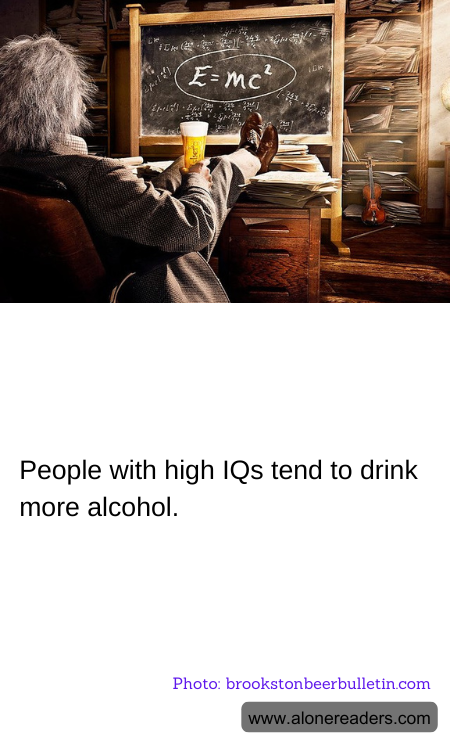
The relationship between high intelligence and increased alcohol consumption is a fascinating and complex subject that has captured the interest of psychologists and sociologists alike. Studies have shown that individuals with higher IQ scores are more likely to consume more alcohol compared to those with lower IQ scores. The reasons behind this correlation are not entirely clear, but several theories have been proposed to explain this phenomenon.
One theory suggests that individuals with high IQs often possess heightened levels of curiosity and openness to experience, traits that are commonly associated with the willingness to experiment and explore new substances, including alcohol. Furthermore, intelligent individuals might be more susceptible to boredom due to their quick processing speeds and seek different forms of stimulation, such as alcohol, to alleviate their restlessness or to mentally challenge the norm.
Another explanation could be related to the social and environmental contexts in which highly intelligent individuals find themselves. People with high IQs often pursue higher educational opportunities, which can lead to increased exposure to environments where alcohol is more readily available and socially acceptable, such as colleges and universities. The elevated stress levels associated with academic and professional achievement might also drive intelligent individuals toward alcohol as a coping mechanism.
Moreover, smarter individuals might be more analytical and, therefore, more skeptical of mainstream health advisories. This characteristic might lead them to disregard the standard guidelines concerning alcohol consumption, embracing a more hedonistic attitude towards drinking.
Despite these correlations, it's critical to acknowledge that the relationship between intelligence and alcohol intake does not necessarily imply causation. High IQ individuals may drink more, but this doesn't mean that high intelligence causes increased alcohol consumption or that drinking more will enhance one's intelligence.
Lastly, while this correlation exists, it's also necessary to consider the broader implications of drinking habits and their impacts on health. Regardless of one’s intelligence, alcohol consumption has known health risks, and wise drinking practices should be a priority for everyone. Awareness and understanding of one’s motivations for drinking, intelligent or not, can play a crucial role in managing consumption and maintaining overall well-being. Consequently, while the intellectual curiosity linked with high IQs might lead to higher alcohol consumption, it also provides an avenue for self-awareness and responsible behaviors towards alcohol use.
