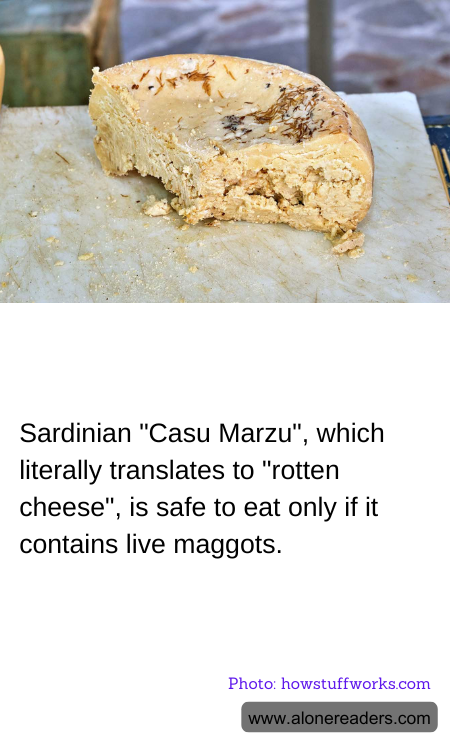
Casu Marzu is a traditional Sardinian cheese known for its very unique and somewhat controversial production process that involves live insect larvae. This cheese, which indeed translates to “rotten cheese” in English, is made from sheep’s milk and is a variant of Pecorino. The distinctiveness of Casu Marzu comes from the way it is fermented. The fermentation is brought about by the introduction of cheese fly larvae (Piophila casei) into the cheese. These larvae digest the fats in the cheese, causing a significant level of decomposition of the cheese’s fats.
The presence of these live maggots is essential for the cheese to be considered authentic Casu Marzu. As they break down the cheese’s fats, they produce a soft texture and a very strong, intense flavor often described as being spicy and piquant. The texture and flavor developed by the activity of the maggots are considered delicacies by some, while others might find the concept off-putting.
Eating Casu Marzu can be risky because live larvae, when ingested, can survive stomach acid and cause myiasis, which is the infestation of live human tissue by maggots. Health concerns have led to regulatory challenges, and the cheese is currently illegal to sell commercially in the European Union. However, it can still be found being made and consumed in the more rural and traditional areas of Sardinia, where it is part of the local heritage and culture.
Despite the health risks, enthusiasts of Casu Marzu ensure that the cheese is safe to consume by verifying the activity of the maggots. If the maggots in Casu Marzu are dead, it is a sign that the cheese has likely spoiled beyond the intended level of fermentation and can be hazardous to health. Thus, paradoxically, the movement of live maggots is an indicator of the cheese’s freshness.
Casu Marzu is typically served on moistened flatbread, and it’s often accompanied by a strong red wine. The consumption method is unique, with some choosing to remove the maggots before eating and others consuming the cheese with the maggots still alive. Eating it requires a certain boldness and is usually savored by those with adventurous palates and a tolerance for high-risk foods. As a cultural artifact and a culinary curiosity, Casu Marzu embodies the daring and tradition of Sardinian gastronomy.
