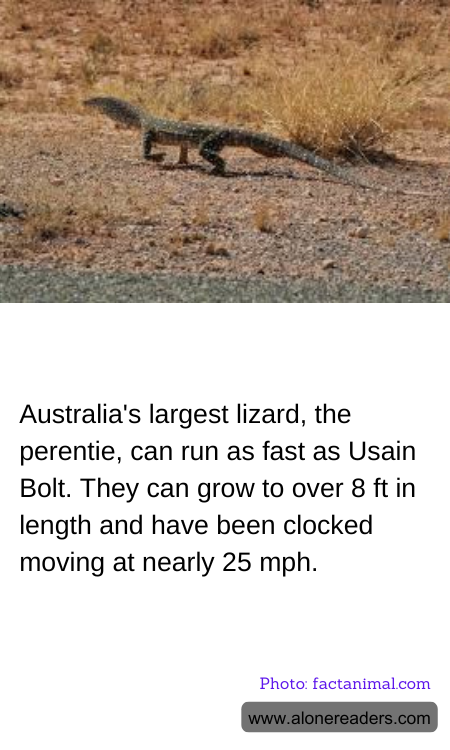
Australia is home to an impressive variety of wildlife, including the perentie, which holds the title of Australia’s largest lizard. This formidable reptile not only reaches lengths of over 8 feet, but it is also incredibly fast. The perentie has been recorded moving at speeds of nearly 25 miles per hour, a pace that rivals that of Olympic sprinter Usain Bolt.
The perentie, scientifically known as Varanus giganteus, is a type of monitor lizard found primarily in the arid desert areas of Western and South Australia. Its size and speed are evolutionary traits that enable it to effectively hunt and capture prey, as well as evade predators. These lizards are carnivorous and their diet typically consists of smaller animals, including birds, mammals, and other reptiles. They are also known to scavenge for carrion and can use their strong limbs and sharp claws to dig for food sources hidden underground.
Adapted to harsh desert environments, perenties have developed several unique physiological traits. They can regulate their body temperature by altering their skin color, getting darker to absorb heat and lighter to reflect it. This helps them in maintaining optimal body temperature to remain active during cooler periods of the day. Moreover, their long legs elevate their bodies above the hot ground, and the bottom of their feet are equipped with scales that help prevent burns from the scorching desert sand.
Despite their fearsome appearance and capabilities, perenties are typically shy around humans and will generally avoid confrontation. Observations of these lizards in the wild are challenging due to their elusive nature and the inhospitable environments they inhabit. For those lucky enough to spot a perentie in the wild, it provides a remarkable glimpse into Australia's unique fauna and the adaptability of life forms in extreme habitats.
Their incredible speed and majestic stature not only make the perentie a topic of interest among herpetologists and wildlife enthusiasts but also spotlight the ecological diversity and evolutionary wonder of Australia’s animal kingdom. While they are currently not considered endangered, their habitat is vulnerable to human encroachment and environmental changes, highlighting the need for continued conservation efforts to ensure these impressive lizards continue to thrive in their natural habitats.
