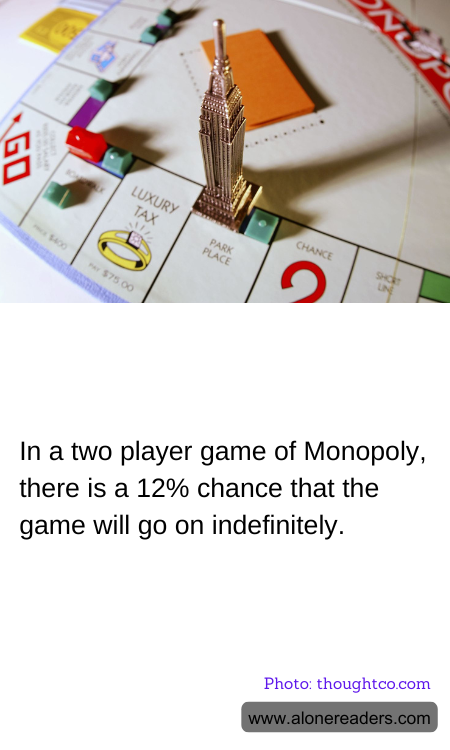
Monopoly, the classic board game centered around money, property trading, and strategic negotiation, becomes particularly interesting when played with just two players. While it's generally deemed a game for larger groups, the dynamics radically shift when only two participants are engaged, leading to an entirely different strategic game play. Although not typical, there is a notable probability, estimated around 12%, that a two-player game could continue indefinitely if the players are evenly matched in skill and resources.
This intriguing possibility stems mainly from the game mechanics. Monopoly involves a great deal of chance, from dice rolls dictating player movement around the board, to the cards drawn from the “Chance” and “Community Chest” decks. Strategic thinking plays a crucial part, yet it is equally important to be at the mercy of luck. Thus, when two players are relatively equal in these aspects, they might perpetually cycle resources between them without a clear end.
The rules in Monopoly are such that players accumulate wealth by purchasing and developing properties, charging rent, and strategically bankrupting their opponents. In a typical game with multiple players, alliances can form, and multiple transactions can occur that lead to shifting power dynamics, which usually lead to a player’s eventual downfall. However, in two-player games, these dynamics are more straightforward and contain fewer external variables, meaning that it often comes down to pure strategy and luck.
Because of this simplicity and direct opposition, the games between two players tend to be quicker but can also result in a deadlock where neither player can generate a decisive advantage to bankrupt the other. They might just keep on acquiring and losing money in cycles, influenced by lucky draws and strategic positioning on the board, potentially dragging the game out endlessly.
For those who might find the prospect of an unending game daunting, incorporating house rules or time limits can provide a solution. Adjusting the rules to include such limitations can introduce new strategic elements to the game, helping ensure it reaches a conclusion. Another alternative could be implementing a scoring system wherein players agree to end the game after a certain time and determine the winner based on their assets and cash at hand.
In summary, while it's not the outcome every Monopoly player may seek, the possibility of an indefinite game occurring in a duel scenario highlights the dramatic impact player count can have on the game's mechanics and outcome. Whether seen as a thrilling challenge or a potential dilemma, this aspect of Monopoly underscores the unpredictable and engaging nature of this beloved board game.
