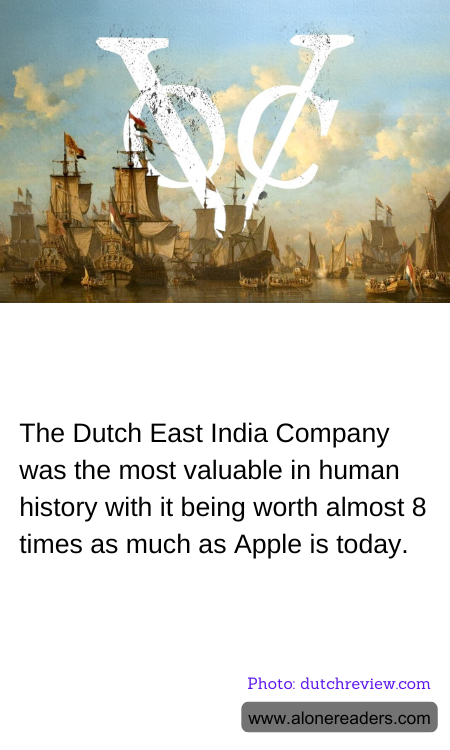
The Dutch East India Company, known as the VOC in Dutch, was an extraordinarily powerful entity in global trade, founded in 1602, and arguably the first ever multinational corporation. Its prowess in trade and its significance in historical financial terms could provide some perspective on contemporary global economic giants such as Apple. Adjusted to today's economic standards, the VOC at its peak was worth an estimated $8.28 trillion, a figure that indeed dwarfs the current market value of Apple, which hovers around the $2 trillion mark.
This astronomical valuation of the VOC was primarily driven by its absolute monopoly over Dutch trade in Asia, including precious goods such as spices, silk, and tea. The company was more than just a commercial enterprise; it effectively acted as a state within a state, possessing quasi-governmental powers including the ability to wage war, imprison and execute convicts, negotiate treaties, coin money, and establish colonies.
Understanding the scale of the Dutch East India Company’s operations provides a vivid depiction of how lucrative and influential the trade routes between east and west were from the 17th to the 19th centuries. The company's success was instrumental in propelling the Netherlands into an era known as the Dutch Golden Age, during which art, science, trade, and the military were among the most acclaimed in the world.
The comparison between the VOC and today’s corporate giants like Apple illuminates not just shifts in the kinds of products and services that are valued over time but also changes in the global economic landscape. Whereas the VOC's wealth was built on physical goods and colonial domination, companies like Apple derive their immense value from technology, intellectual property, and a vast global consumer market for electronics.
While it is fascinating to compare the economic might of such disparate entities across time, it also serves as a reminder of the changing dynamics of global power, commerce, and influence. Even as the VOC’s activities often had devastating effects on the regions it controlled, its legacy helps us reflect on the broader implications of commercial dominance and market control. The story of the VOC is a powerful lesson in how commerce can shape global history, influencing everything from geopolitics to local economies, a theme that remains relevant as modern companies also wield significant global influence.
