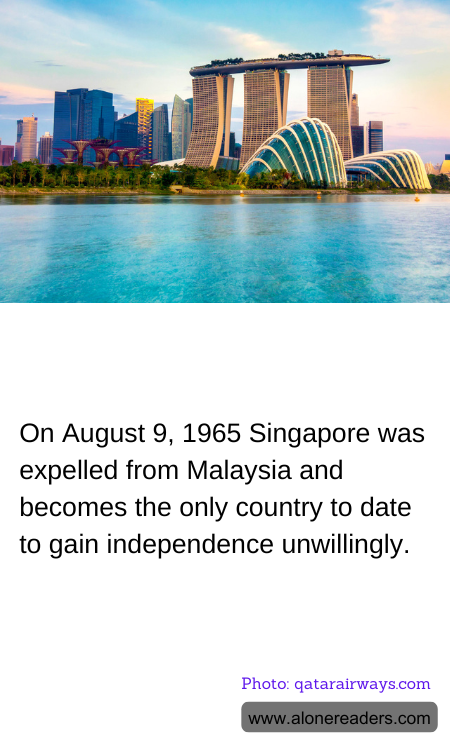
On August 9, 1965, Singapore experienced a pivotal moment in its history when it was expelled from Malaysia, becoming the only nation in modern times to gain independence against its will. The separation was the culmination of a tumultuous two-year union marked by political discord and racial strife between the island's primarily Chinese population and the Malay majority in the rest of Malaysia.
The roots of the separation lay in profound ideological differences between the ruling parties of Singapore and Malaysia. Singapore’s People’s Action Party (PAP), led by Lee Kuan Yew, advocated for a Malaysian Malaysia, where citizenship and rights were equal, irrespective of race or ethnicity. This vision clashed with the policies of the Malaysian government, which favored Malays through affirmative action measures under the bumiputera policy. These differences exacerbated communal tensions, leading to riots in July 1964 and September 1964, which underscored the deep societal divisions within the merged nations.
Economic and political pressures continued to mount until the Malaysian central government, led by Prime Minister Tunku Abdul Rahman, decided that separation was the only solution to the persistent conflicts. The decision was not mutual or planned; rather, it was a sudden resolution reached by Malaysia's leaders, who then persuaded Lee Kuan Yew and his party of its necessity for peace and stability in the region.
The proclamation of Singapore's independence was met with a mix of shock, bewilderment, and sorrow among its leaders and citizenry. Lee famously teared up during a televised press conference, reflecting on the heavy responsibilities that lay ahead for the newly independent nation without a hinterland, natural resources, or established institutions of governance.
Despite its reluctant birth, Singapore embarked on a rigorous nation-building program. Under Lee's leadership, the government prioritized economic development, investing in education, housing, and infrastructure. The country also cultivated a national identity that emphasized multicultural harmony and inclusivity. Over the decades, Singapore transformed from a nascent state with uncertain prospects to a global hub for trade, finance, and commerce, setting an example of how effective governance and forward-planning can overcome initial adversities. The story of Singapore since its unexpected independence is a testament to the resilience and ingenuity of its people.
