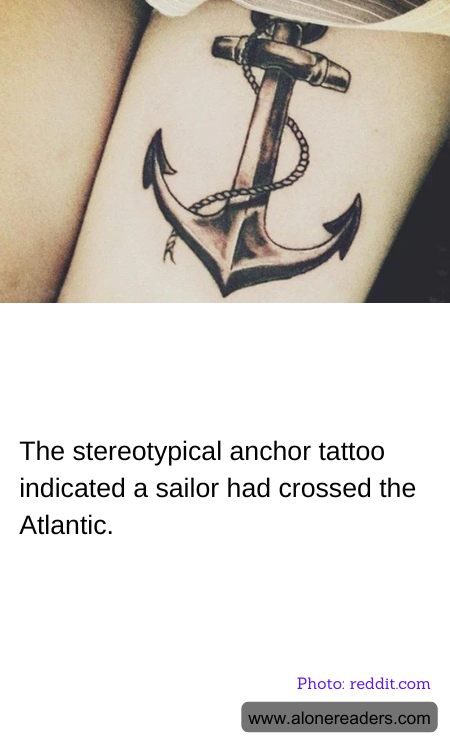
Historically, tattoos have served as a potent form of expression for sailors, with each design holding specific meanings and tales of maritime life. Among these iconic symbols, the anchor tattoo stands out for its significance and recognizability. Traditionally, an anchor tattoo wasn't merely a choice of aesthetics; it served as a badge of experience, often implying that the wearer had successfully navigated the challenging waters of the Atlantic Ocean.
This particular association between the anchor tattoo and crossing the Atlantic can be traced back to the age of sail, when long voyages and the perils of the sea were everyday realities for sailors. The anchor itself symbolizes stability and strength, reflecting a sailor's ability to remain steady amidst tumultuous seas and unpredictable weather conditions. It was also a symbol of safely reaching the shelter of port—essentially, surviving the dangers of the voyage. Hence, sporting an anchor tattoo was a mark of accomplishment, a sign that one had faced and overcome the hazards of one of the world's most formidable oceans.
Further, the anchor is deeply rooted in maritime lore and is connected to various naval traditions. It often complements other nautical motifs in sailor tattoos, such as swallows, ships, and mermaids, each adding layers of meaning to the sailor’s personal narrative. For instance, it was also believed that if a sailor drowned, the anchor tattoo would help 'anchor' his soul to the sea bed, granting him peace.
In contemporary times, while the direct link between specific tattoos and maritime achievements may not hold as strongly, the anchor remains a popular choice for tattoos, resonating with people from all walks of life. Today, it is often interpreted more broadly as a symbol of stability, hope, and resilience. Regardless of its evolution, the anchor tattoo preserves its enduring legacy and continues to be imbued with the courage and spirit of the sailors who first bore this iconic emblem.
