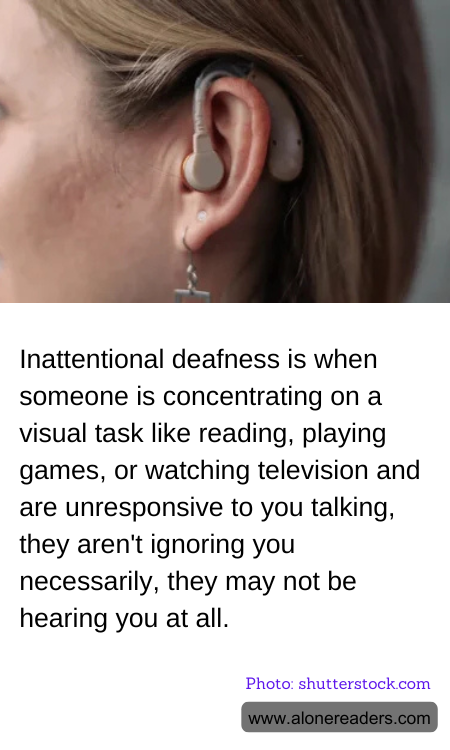
Inattentional deafness is a psychological phenomenon where an individual becomes so engrossed in a visual activity that they effectively 'tune out' auditory stimuli, to the point of not hearing sounds and voices around them. This occurrence underlines the limited capacity of our attentional system, showing how deeply focused attention on one sense (such as sight) can diminish the functioning of another (such as hearing). The most common situations where inattentional deafness occurs are during intense reading, playing video games, or while watching television—any scenario that demands significant visual concentration.
The brain, facing the task of processing large amounts of information from the visual task, reallocates resources away from processing sounds. This selective attention mechanism essentially filters out what the brain deems as unnecessary sensory input, prioritizing the task at hand. Research in cognitive psychology suggests that this isn't a deliberate act of ignoring sound but rather an unconscious inability to perceive it. This demonstrates the intricate ways in which our sensory systems interact based on cognitive load and priorities set by the brain.
In everyday life, this phenomenon can lead to miscommunications and, at times, frustration, particularly in social contexts where someone may feel ignored. Understanding inattentional deafness helps in recognizing these situations not as intentional disregard but as a natural limitation of our cognitive processing capabilities. Awareness and knowledge of inattentional deafness can promote more patience and effective communication strategies in both personal and professional settings, acknowledging when someone might need a gentle prompt to shift their focus rather than misinterpreting their behavior as uncooperative or rude.
