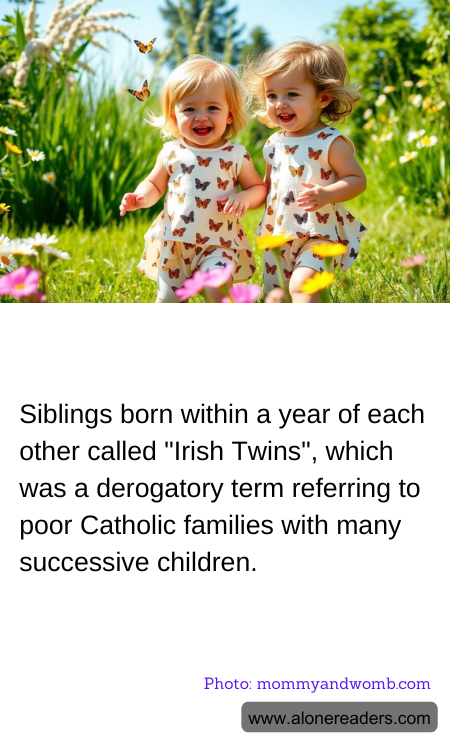
"Irish twins" refers to siblings born within 12 months of each other, or even within the same calendar year or school grade. This term originated as a pejorative expression rooted in a stereotype about Irish immigrant families that were perceived to have an unusually high number of children in rapid succession. The label carries connotations from the 19th and early 20th centuries, a time when Irish immigrants, particularly in the United States, faced significant ethnic prejudice and discrimination.
The implication was that Irish parents, often Catholics, either did not know about or did not practice birth control, leading to tightly spaced pregnancies. This stereotype dovetailed with broader xenophobic attitudes that portrayed Irish families as poor and uneducated. Despite its origins, over time, the phrase has shed much of its initial negative weight and is sometimes used more neutrally among families to describe any siblings born close together, regardless of their ethnic background.
Nonetheless, the concept of "Irish twins" illuminates important historical and social dynamics, including patterns of immigration, religious affiliations, and socioeconomic conditions. It also highlights how language evolves, reflecting changes in social attitudes and sensitivities. In contemporary contexts, it’s important to use such terms with awareness of their historical baggage to avoid perpetuating outdated stereotypes or offending those with Irish heritage. Conversations about family planning, cultural identity, and childbirth are complex and differ widely across different cultural or religious communities, underpinning the significance of understanding and respect in language use.
