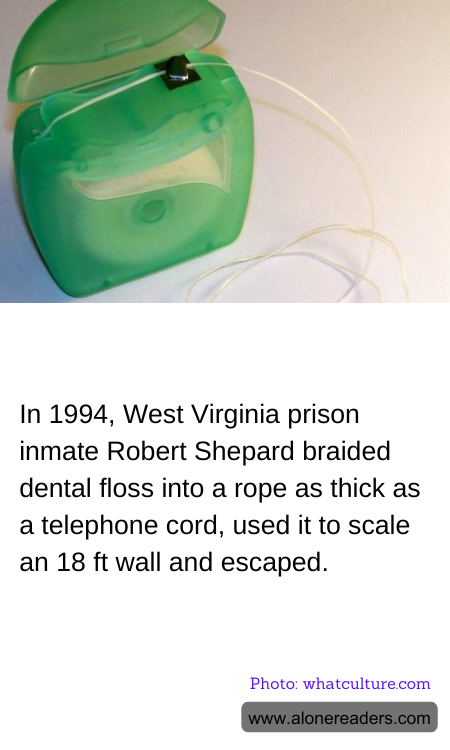
In a daring escape that sounds like a scene straight out of a Hollywood movie, Robert Shepard, a prison inmate in West Virginia, managed to break free from confinement using an unconventional tool: dental floss. In 1994, Shepard ingeniously braided strands of dental floss into a makeshift rope as thick as a telephone cord—a feat that not only showcased his ingenuity but also highlighted a significant lapse in prison security.
Dental floss, typically provided to inmates as part of basic hygiene kits, is designed to be strong enough to clean between teeth but would not normally be considered a potential tool for escape. However, the tensile strength of multiple strands woven together can be quite substantial. Shepard exploited this property by accumulating enough floss over time to create a robust and lengthy rope.
The escape occurred when Shepard, demonstrating both daring and determination, used this dental floss rope to scale an 18-foot wall that encircled the prison. The audacity of using such a mundane and unassuming item for escape captured both public and official attention. His successful climb not only led to his temporary freedom but also prompted immediate reviews of prison protocols regarding inmate access to seemingly innocuous items that could be repurposed for escape.
His recapture shortly after the escape put an end to his brief period of freedom, but the incident left a lasting impression on prison security measures. Following the incident, there were discussions and likely reforms on how everyday items like dental floss could be distributed and monitored within prison populations to prevent such occurrences in the future.
Robert Shepard’s escape serves as a reminder of the resourcefulness that individuals can exhibit when faced with desperate circumstances. It also underscores the constant need for vigilance and adaptation in security measures within correctional facilities.
