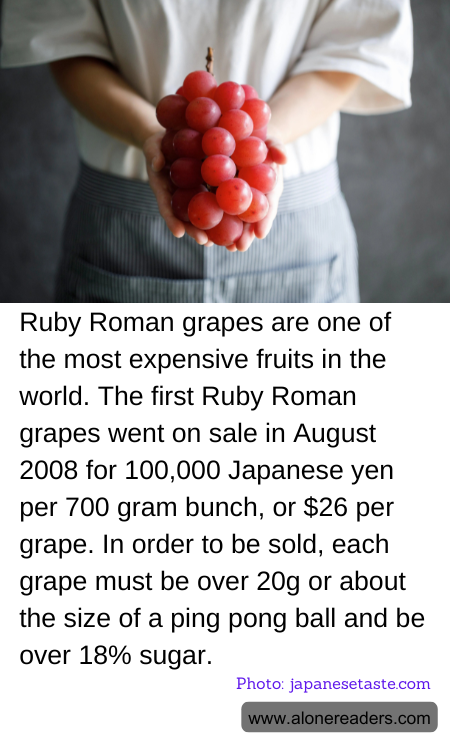
Ruby Roman grapes, cultivated exclusively in Ishikawa Prefecture, Japan, have gained a renowned status as one of the world's most luxurious and expensive fruits since their debut in the market in August 2008. The grapes are not just famous for their price, which initially was as high as 100,000 Japanese yen (roughly $910) per 700-gram bunch, equating to about $26 per grape, but also for their distinctive characteristics and stringent quality standards which they must meet before being sold. Each grape must weigh at least 20 grams, which is roughly the size of a ping pong ball, and must contain over 18% sugar content, ensuring a rich, sweet flavor that distinguishes them from ordinary table grapes.
The cultivation process of Ruby Roman grapes is meticulous, with careful attention given to the environment and methods used to grow the grapes. Each bunch is painstakingly cared for, with growers often thinning the clusters to ensure that the remaining grapes have enough nutrients and space to grow to the required size. The growers' efforts culminate in a grape that not only meets strict size and sweetness criteria but also has a perfect round shape and a vibrant red color, making it as visually appealing as it is delicious.
The exclusivity and prestige associated with Ruby Roman grapes make them a popular item at auctions, where prices can skyrocket as retailers and individuals vie to get their hands on what is considered a status symbol. In fact, the record for the highest amount paid for a bunch of Ruby Roman grapes is astonishing — in 2016, a single bunch sold for 1.1 million yen (approximately $11,000 USD at the time), making it one of the most expensive fruits ever sold.
The limited supply, coupled with high demand from luxury fruit markets and upscale restaurants, continues to drive up prices. Consumers of Ruby Roman grapes often include them in special celebrations or give them as high-end gifts, reflecting their cultural significance as symbols of opulence and good fortune. As Ruby Roman grapes continue to occupy this niche luxury market, they serve not only as a testament to the lengths of agricultural innovation but also to the extravagant tastes of a select market willing to pay a premium for extraordinary produce.
