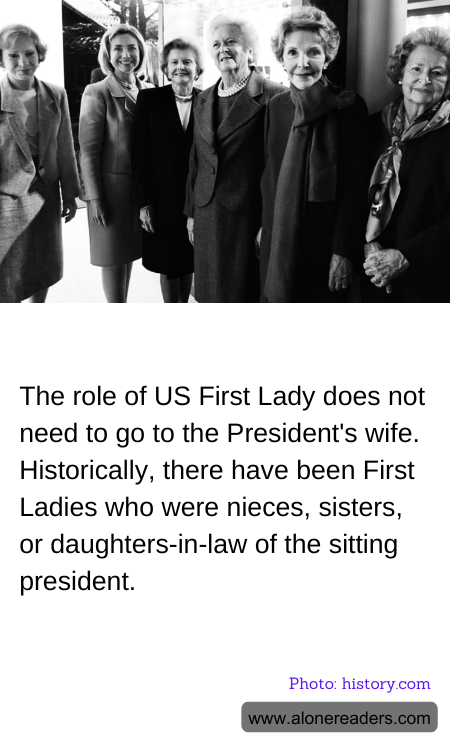
In the United States, the title of First Lady traditionally goes to the wife of the president, but it isn't a requirement defined by law. Throughout American history, various women other than the president’s wife have filled this role due to circumstances such as the president being a widower, bachelor, or his wife being unable or unwilling to perform the duties of First Lady. These women have often been close relatives such as daughters, sisters, nieces, or daughters-in-law.
One notable example is Harriet Lane, the niece of lifelong bachelor James Buchanan, the 15th President of the United States. Harriet assumed the social duties of First Lady with considerable charm and effectiveness during her uncle’s administration from 1857 to 1861. Similarly, when President Andrew Jackson's wife, Rachel, died just before his inauguration, his niece, Emily Donelson, served as the official hostess and de facto First Lady. Later, his daughter-in-law, Sarah Yorke Jackson, also took on the responsibilities.
These instances highlight the flexibility of the role of First Lady, demonstrating that it evolves according to the personal circumstances of the president. The primary function of the First Lady has traditionally been to manage the White House, organize and attend official ceremonies and events, and champion social causes. Therefore, the person best suited to fulfill these responsibilities can indeed vary.
The adaptability in who can assume the role of First Lady underscores the broader, unofficial and symbolic nature of the position. While the First Lady might often be the closest confidante to the president, anyone undertaking this role, regardless of their relation to the president, steps into a position that embodies elements of public expectation, personal support to the president, and involvement in social and political causes. This flexibility in the role’s designation shows an understanding that the foremost requirement is not familial ties to the president but the capability and willingness to meet the demands and expectations of the role.
