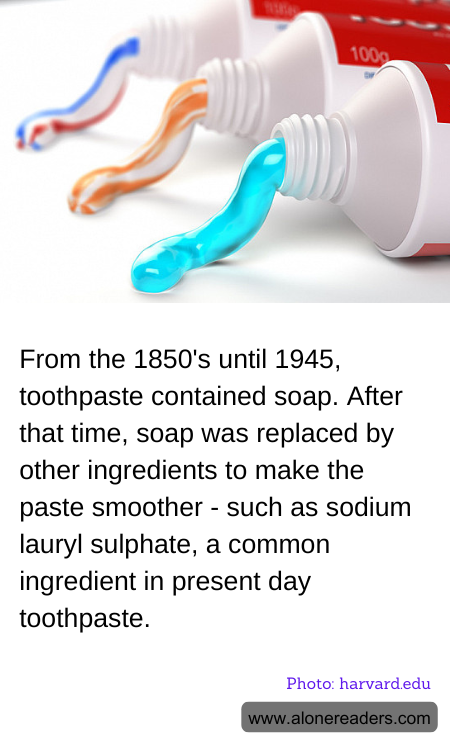
Toothpaste has undergone significant changes throughout its history, reflecting broader shifts in technology, health understanding, and consumer preferences. Prior to 1945, soap was a common ingredient in toothpaste, serving as a base material for the product. Indeed, the use of soap helped to scrub the teeth, providing the necessary cleaning action that removed food debris and potential plaque. These early formulations, dating back to the 1850s, didn’t just use any type of soap; they typically incorporated relatively mild soaps, which were enough to cleanse without being overly harsh.
However, the texture and taste of soap-based toothpaste did not appeal to everyone, and the evolution of toothpaste saw it eventually replaced by more sophisticated surfactants. Following World War II, manufacturers began to experiment with new materials to improve the sensory experience and efficacy of toothpaste. Sodium lauryl sulphate (SLS) emerged as a superior alternative to soap. Known for its foaming properties, SLS efficiently disperses the toothpaste mixture throughout the mouth, enhancing its cleaning ability. Additionally, it contributes to the toothpaste's smooth texture, making it more pleasant to use.
SLS is not without its critics, though. Some studies suggest that it can irritate the mouth, particularly causing issues for those with sensitive gums or predisposed to canker sores. This has led to the development of SLS-free toothpastes, which promise to deliver the dental cleaning power of traditional toothpastes without the potentially irritating effects of sodium lauryl sulphate.
Overall, the transition from soap-based to SLS-based toothpaste is indicative of the broader trends in personal care products, where manufacturers continuously seek to balance efficacy, user experience, and safety. As we move forward, the evolution of toothpaste will likely continue, possibly incorporating increasingly natural ingredients or tailoring formulations to the specific oral health needs of different populations.
