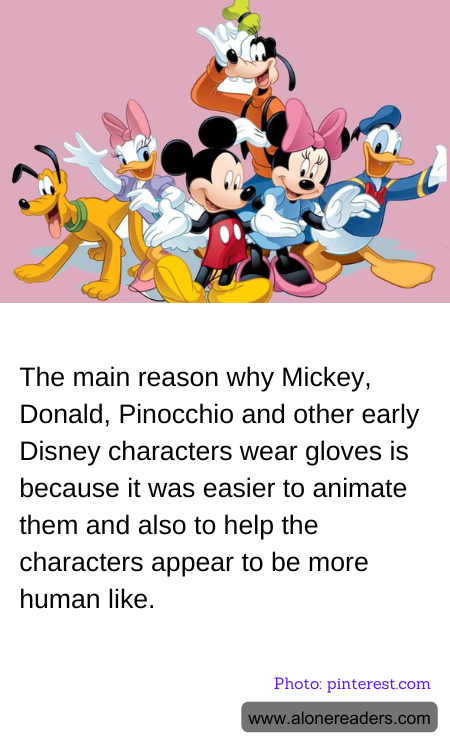
The iconic white gloves worn by classic Disney characters such as Mickey Mouse, Donald Duck, and Pinocchio have become a hallmark of early animation style. The reason behind this stylistic choice is two-fold, primarily rooted in animation practicality and character relatability.
In the era when these characters were conceived, animation was a painstaking process, with artists drawing each frame by hand. The gloves served first and foremost as a simplification tool for animators. Hands are notoriously difficult to draw, particularly when detailing complex movements or expressions. By adorning characters with white gloves, animators were able to bypass the intricate detailing of fingers and palms with a smoother, more uniform shape that didn’t require as much effort to animate consistently across frames.
Furthermore, using gloves helped to accentuate the characters’ hand movements, making their actions more noticeable and expressive. Given that early animations were silent or had limited sound capabilities, visual gestures were crucial for storytelling. The white gloves against the characters' typically darker bodies provided a high contrast that emphasized hand gestures, which was necessary for communicating actions and emotions effectively.
The choice of gloves also had an anthropomorphic function; they made these animal characters appear more human-like. This humanization made it easier for audiences to connect with and empathize with the characters on screen. Additionally, at the time of these characters' creation in the early 20th century, gloves were often associated with cleanliness and a degree of sophistication. This attribute would have given characters like Mickey Mouse—a playful and ultimately good-hearted character—an air of approachability and charm, enhancing their appeal to audiences of all ages.
Thus, the use of gloves was a clever incorporation by early Disney animators and designers. It adeptly combined practical animation techniques with effective character design strategy, contributing significantly to the success and timeless appeal of these beloved characters.
