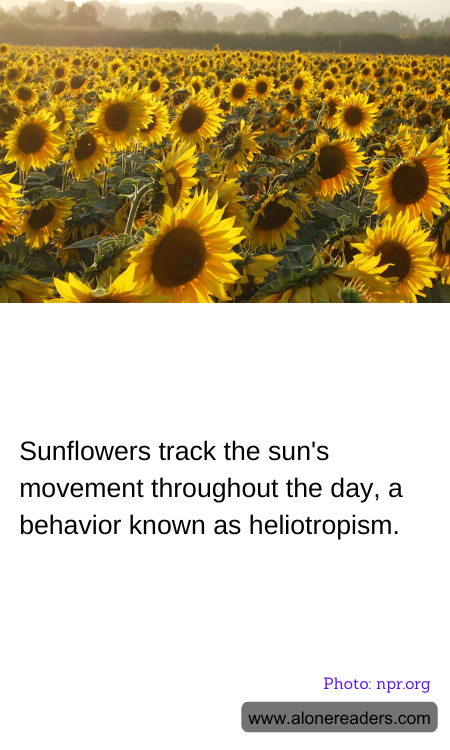
Sunflowers are captivating in their beauty and fascinating in their behavior, notably their ability to follow the sun from east to west across the sky, a phenomenon known as heliotropism. This unique characteristic is most prominent during the earlier stages of a sunflower's life before its blooms open fully. Young sunflower buds exhibit a rhythmic movement in response to the sun’s path, which is driven by the growth of different sides of the stem. During the night, they can reset to their original eastward position, ready to start the cycle again at dawn.
The scientific mechanism behind this movement lies in the sunflower's growth hormones, predominantly auxins, which are unequally distributed across the stem. This uneven distribution causes one side of the stem to grow faster than the other, tilting the sunflower head towards the sun throughout the day to maximize light absorption for photosynthesis. This not only aids in their growth by optimizing energy intake but also has implications for agricultural practices, as sunflower fields can be oriented to maximize sunlight exposure, increasing the efficiency of growth.
Moreover, this heliotropic movement becomes fixed once the sunflower matures and the flowers are fully open. At this stage, sunflowers generally face east throughout the day. This eastward orientation maximizes pollinator attraction and may also play a role in temperature regulation of the flower head. Facing the sun as it rises helps to quickly warm the flowers after cold nights, making them more attractive to pollinators like bees, which are active during warmer, sunnier hours. Additionally, facing east throughout the day helps maximize the longevity and vitality of the flowers, potentially increasing seed production and growth effectiveness.
Sunflowers not only contribute to the beauty and biodiversity of the environments they inhabit but are also a source of food and oil. Their seeds are rich in fats, oils, and proteins, making them a valuable agricultural product. The sun-tracking behavior of sunflowers is not just a captivating natural phenomenon but also represents an evolutionary advantage, enhancing their survival and reproductive success. This unique characteristic of sunflowers continues to be a subject of interest not only for botanists and farmers but also for scientists interested in biomimicry, looking to apply principles from nature to technology and design.
