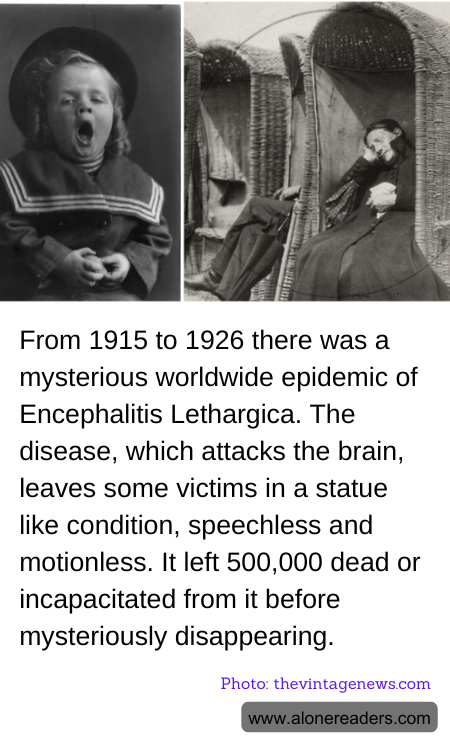
Between 1915 and 1926, the world was gripped by a mysterious and devastating outbreak of Encephalitis Lethargica, a disease that primarily affects the brain. Often referred to as the 'sleeping sickness,' not to be confused with the tsetse fly transmitted Trypanosoma, this puzzling condition emerged during and just after World War I, leaving an unforgettable mark on global health history.
Encephalitis Lethargica is characterized by high fever, headache, fatigue, and in severe cases, it progresses to a state where victims exhibit Parkinson-like symptoms. Patients might find themselves unable to move or speak, presenting a statue-like appearance that is both tragic and baffling. The mechanisms behind this disease involve severe inflammation of the brain, which disrupts the normal functioning of neural pathways.
The impact of the epidemic was staggering; it is estimated that about 500,000 people died from the disease or were left severely incapacitated. Those who survived often endured long-term neurological damage, significantly affecting their quality of life. The disease appeared to affect young adults predominantly, although cases were recorded across various age groups.
What remains particularly chilling about Encephalitis Lethargica is its sudden disappearance. After wreaking havoc across the globe, the epidemic suddenly receded and no new cases have been reported since the late 1920s. This abrupt end, as well as the onset, has puzzled scientists and historians alike.
Various theories have been proposed to explain the emergence and decline of Encephalitis Lethargica. Some researchers believe it may have been caused by an atypical reaction to the influenza virus; others suggest it might have been a result of an autoimmune response. However, despite extensive research, the exact cause of the epidemic remains unknown.
The legacy of Encephalitis Lethargica continues to haunt the neuroscientific community. The disease highlighted the potential for rare neurological conditions to emerge rapidly and with devastating outcomes. It also underscored the necessity of global surveillance and research in understanding and combating such mysterious illnesses. As history has shown, the answers might not be immediate, but continuous exploration and learning remain our best tools against the unforeseen challenges of disease.
