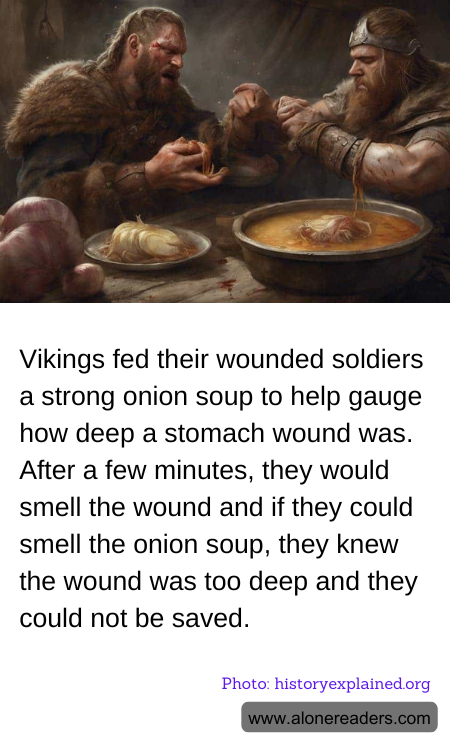
The Vikings, known for their fierce and resilient nature, had various intriguing medical practices, especially when it came to battlefield injuries. One of the more fascinating methods involved the use of onion soup to assess the severity of stomach wounds. When a Viking warrior sustained such an injury, they would be fed a broth made strongly of onions, a staple in the Norse diet, which was believed to have several medicinal properties.
This practice was based on a rudimentary understanding of the human body's systems. The belief was that if the warrior's stomach wound was deep enough, the smell of onions from the soup would permeate through the wound. After the injured soldier consumed the soup, fellow warriors or the battlefield healer would wait a short period and then smell the wound. The presence of the onion odor indicated a deep wound, possibly penetrating the stomach or intestines, and suggested a grave prognosis.
This method of diagnosis highlights the pragmatic approach of Viking medics, who had to make quick decisions to save resources and time during battles. Those who were unlikely to survive could be identified quickly, allowing medics to focus their efforts on warriors with survivable injuries.
While this technique may seem crude by modern standards, it is reflective of the resourcefulness and ingenuity of the Vikings in managing battlefield injuries with the limited medical knowledge and tools they had available. Today, such practices contribute to the rich tapestry of Viking history and their enduring legacy as both fierce warriors and innovative survivors.
